
The first time a telescope on the Tower of Pisa:
science, inclusion and the eclipse over the Tyrrhenian
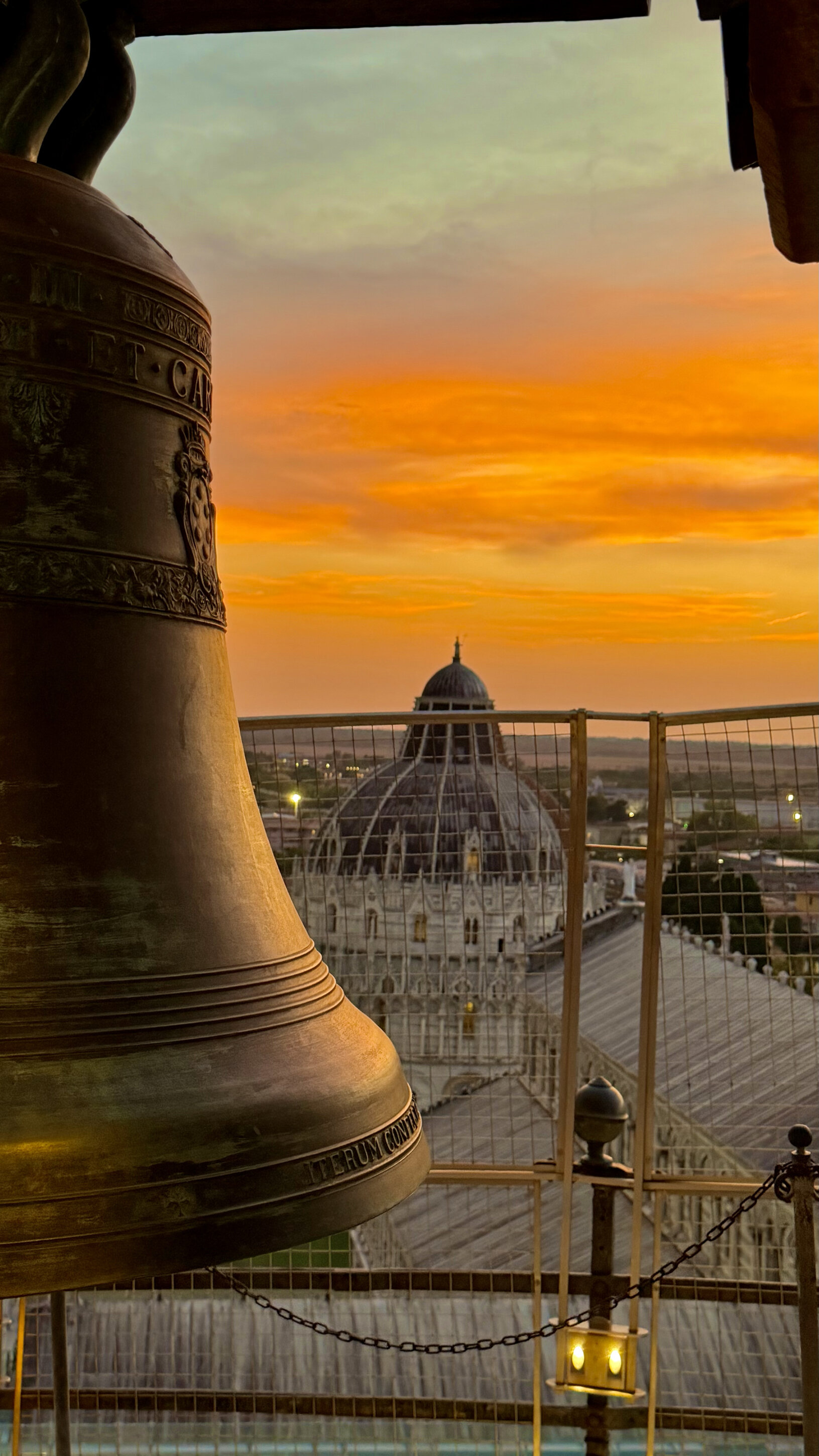
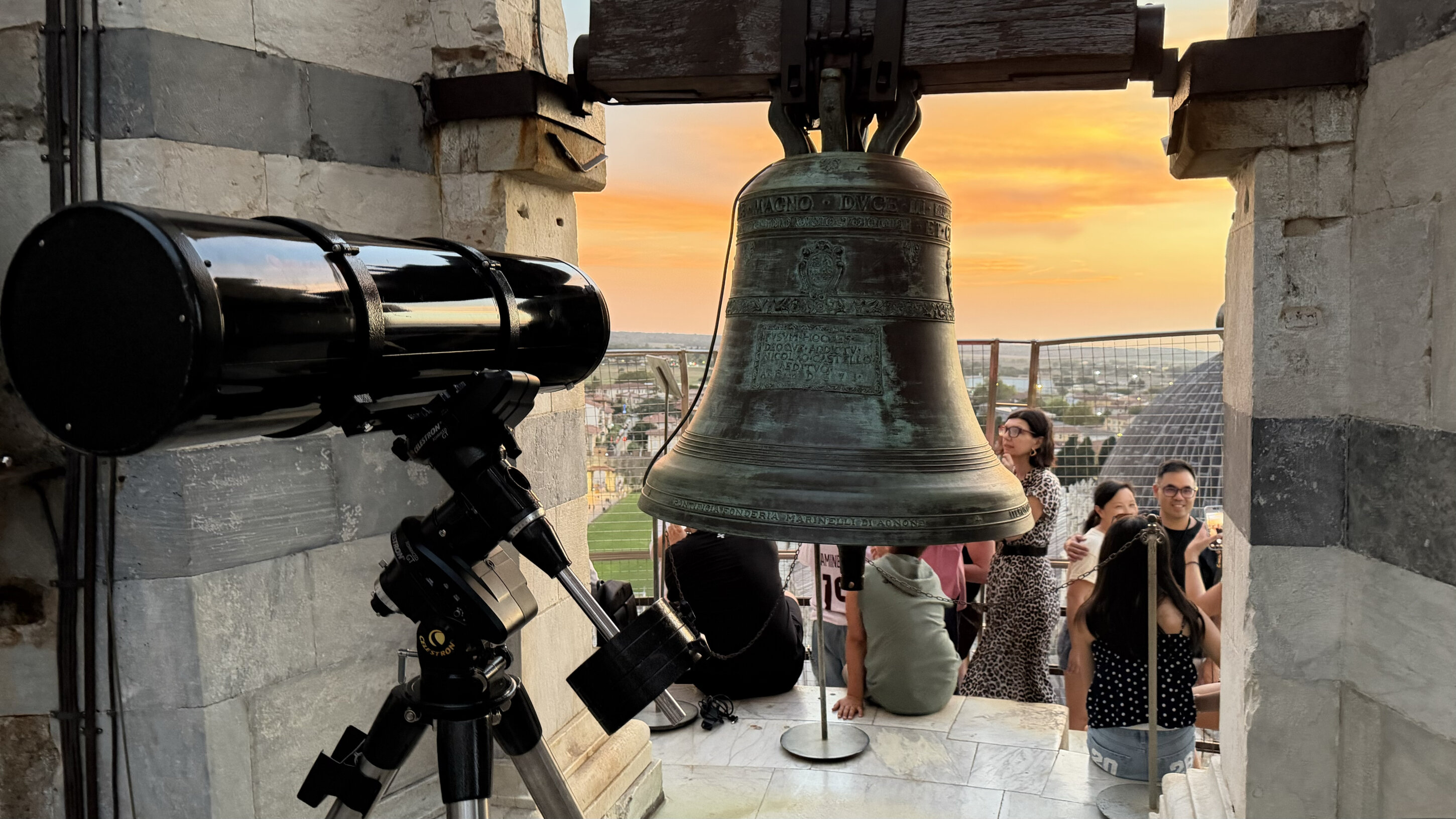
Not even Galileo Galilei, who according to the famous legend used the Leaning Tower for his studies on falling bodies, had gone that far. For the first time in history, the top of Pisa’s symbolic monument hosted a real astronomical observing station.
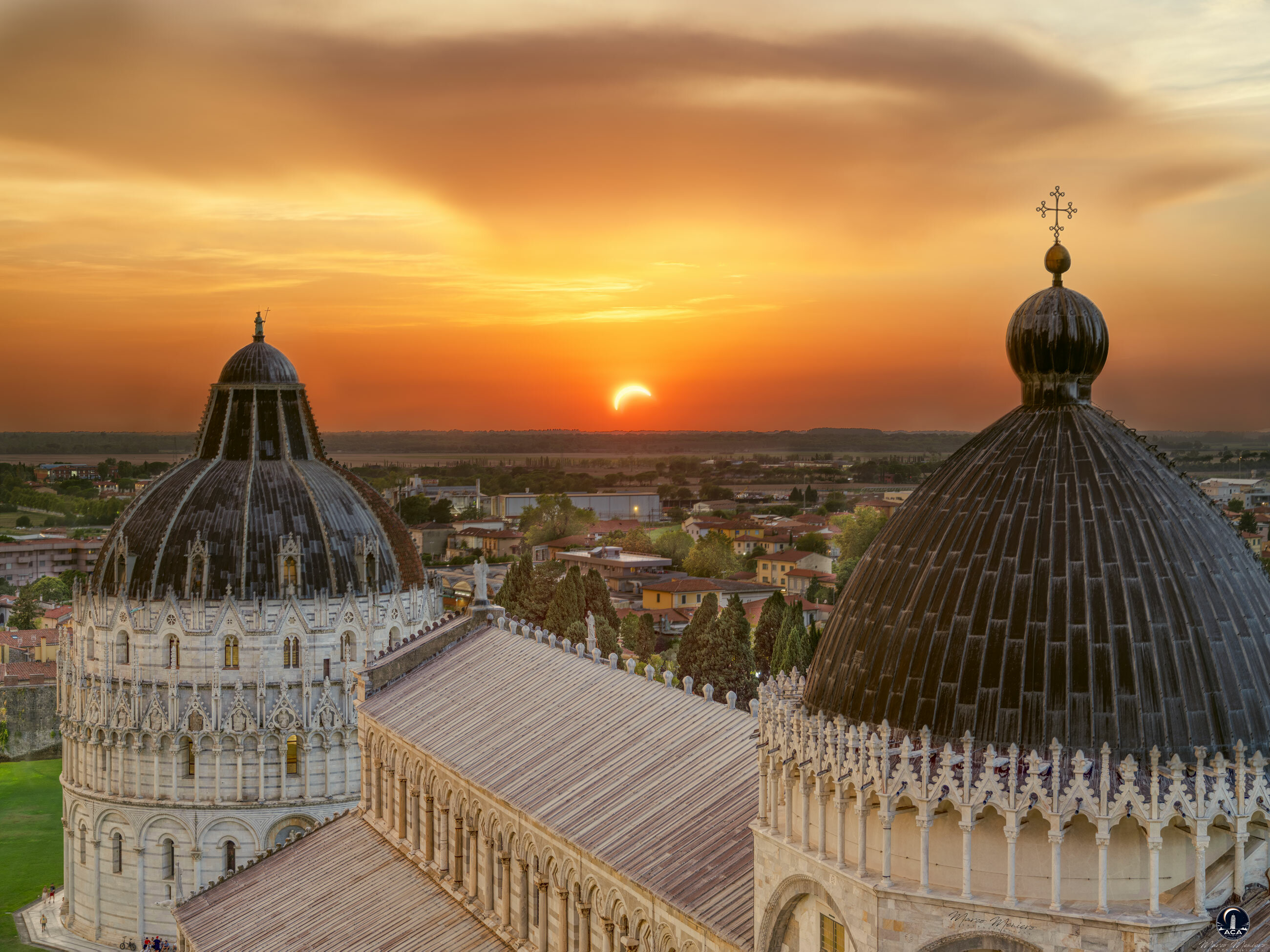
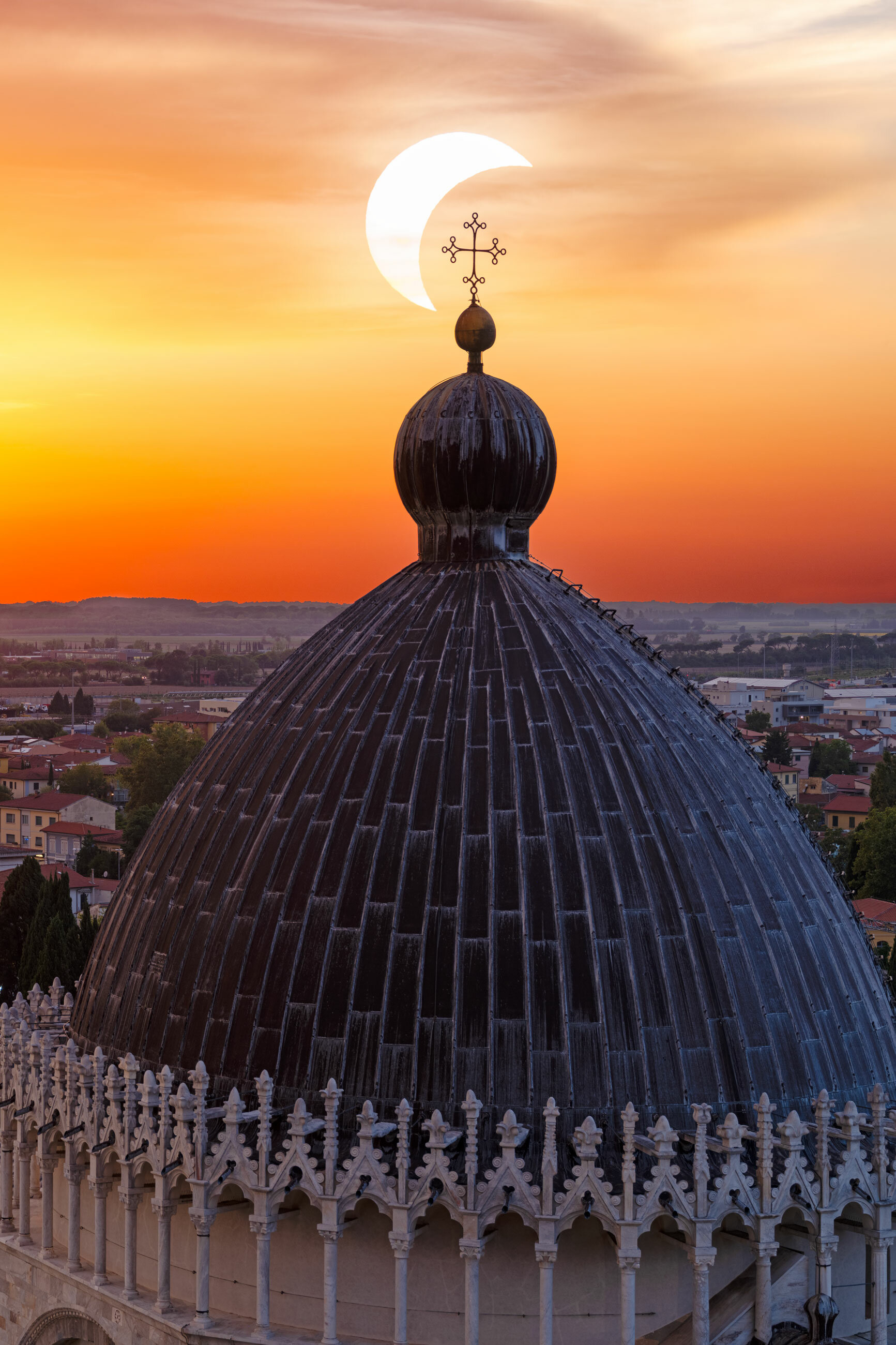
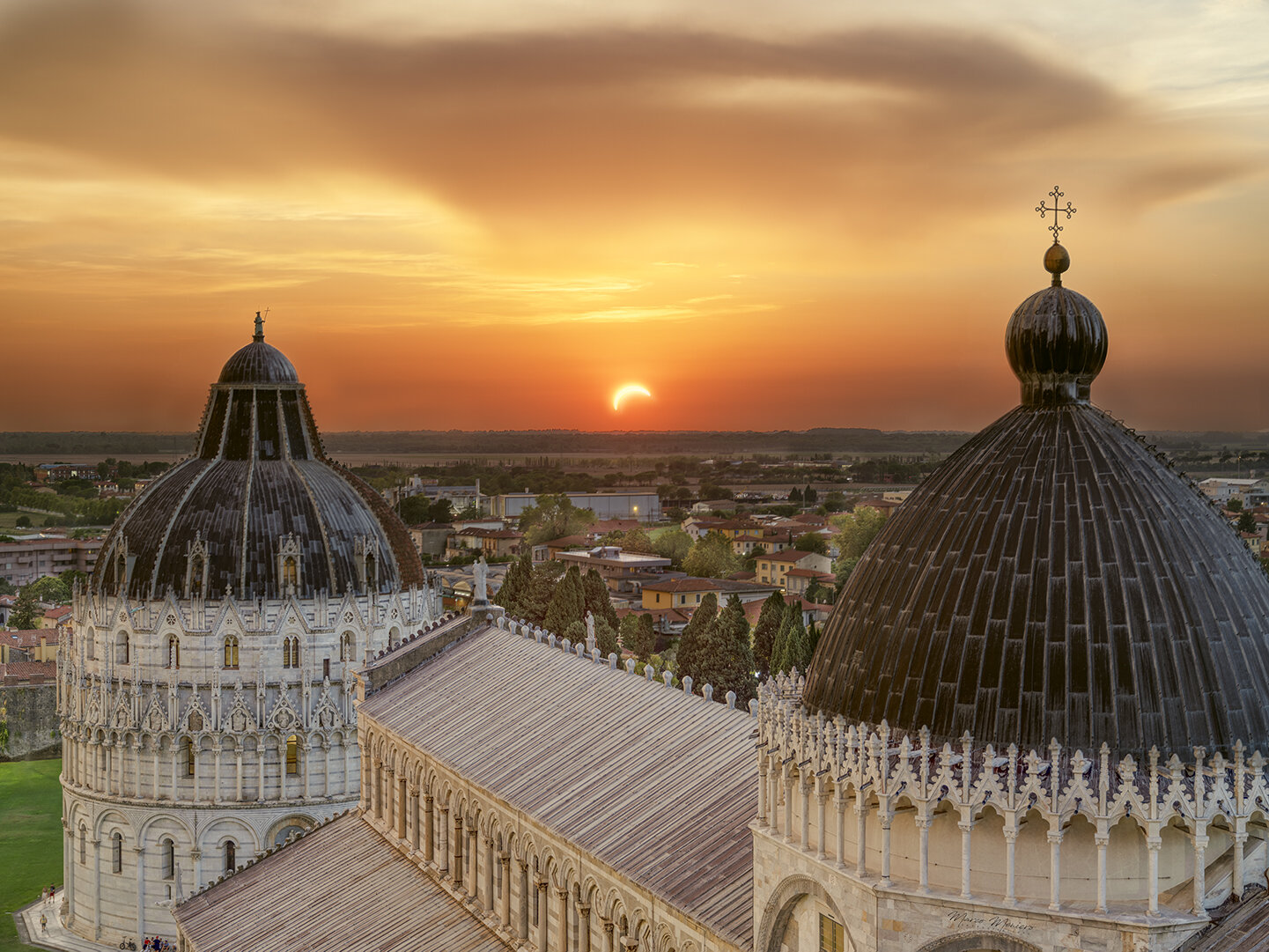
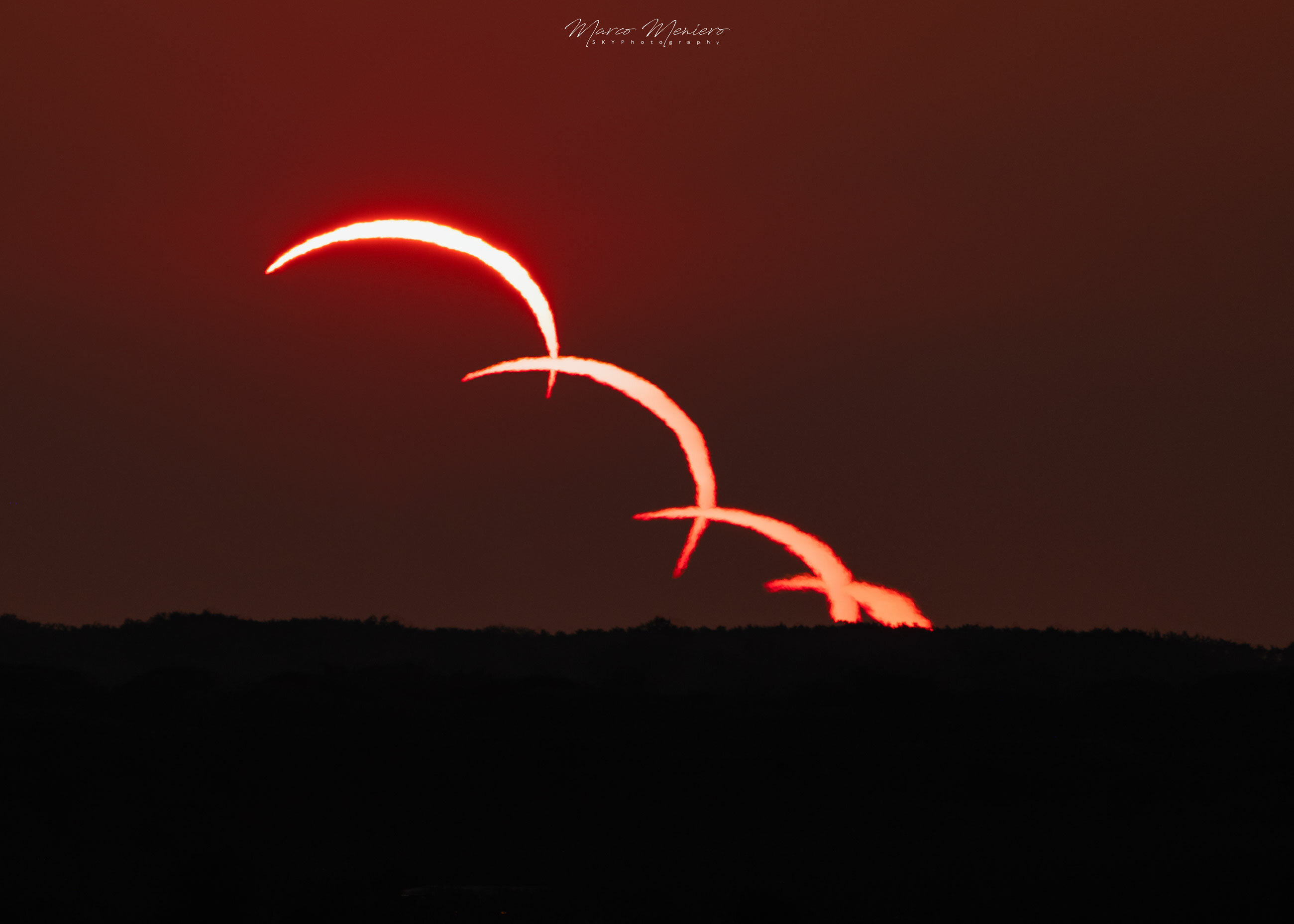
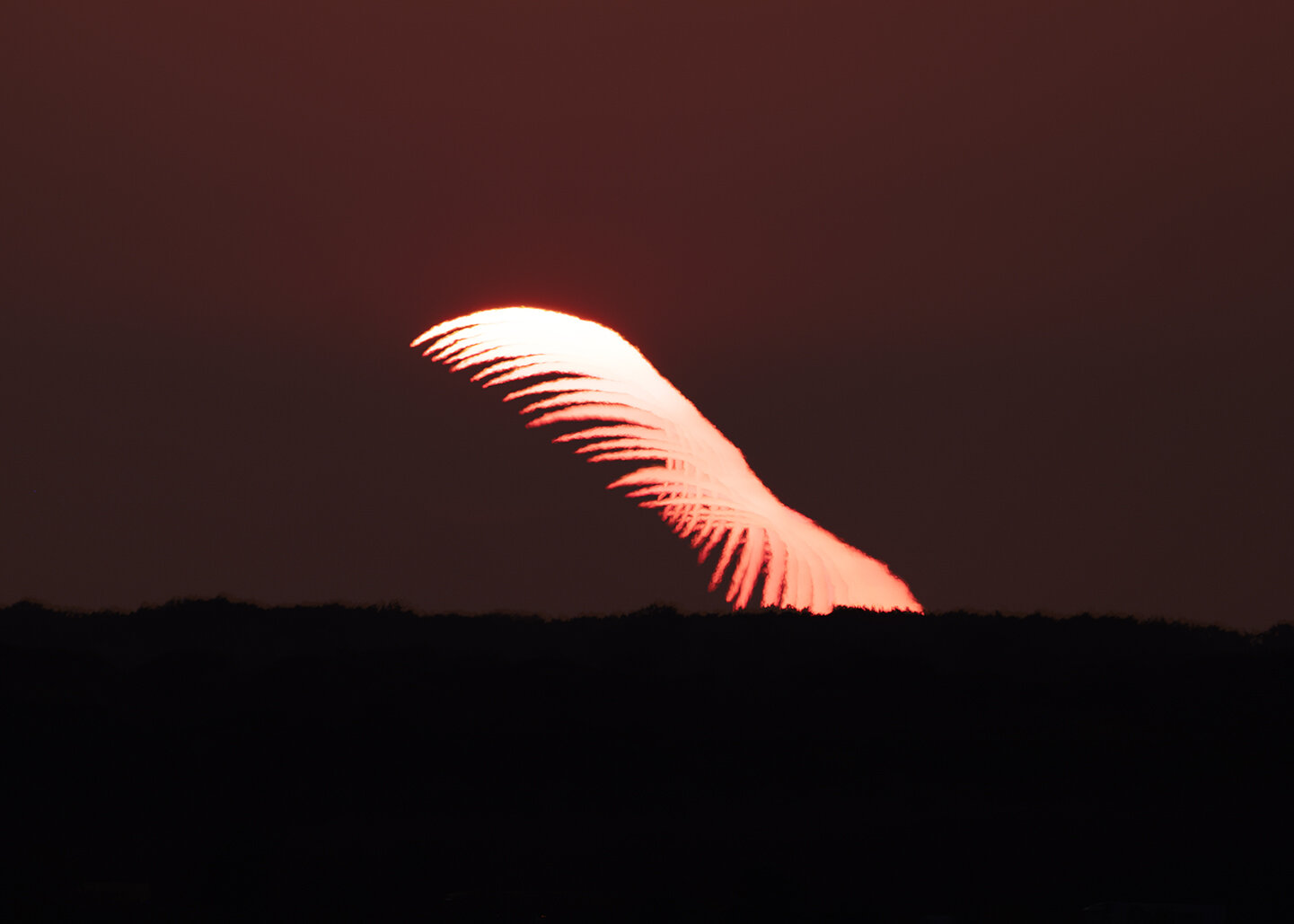
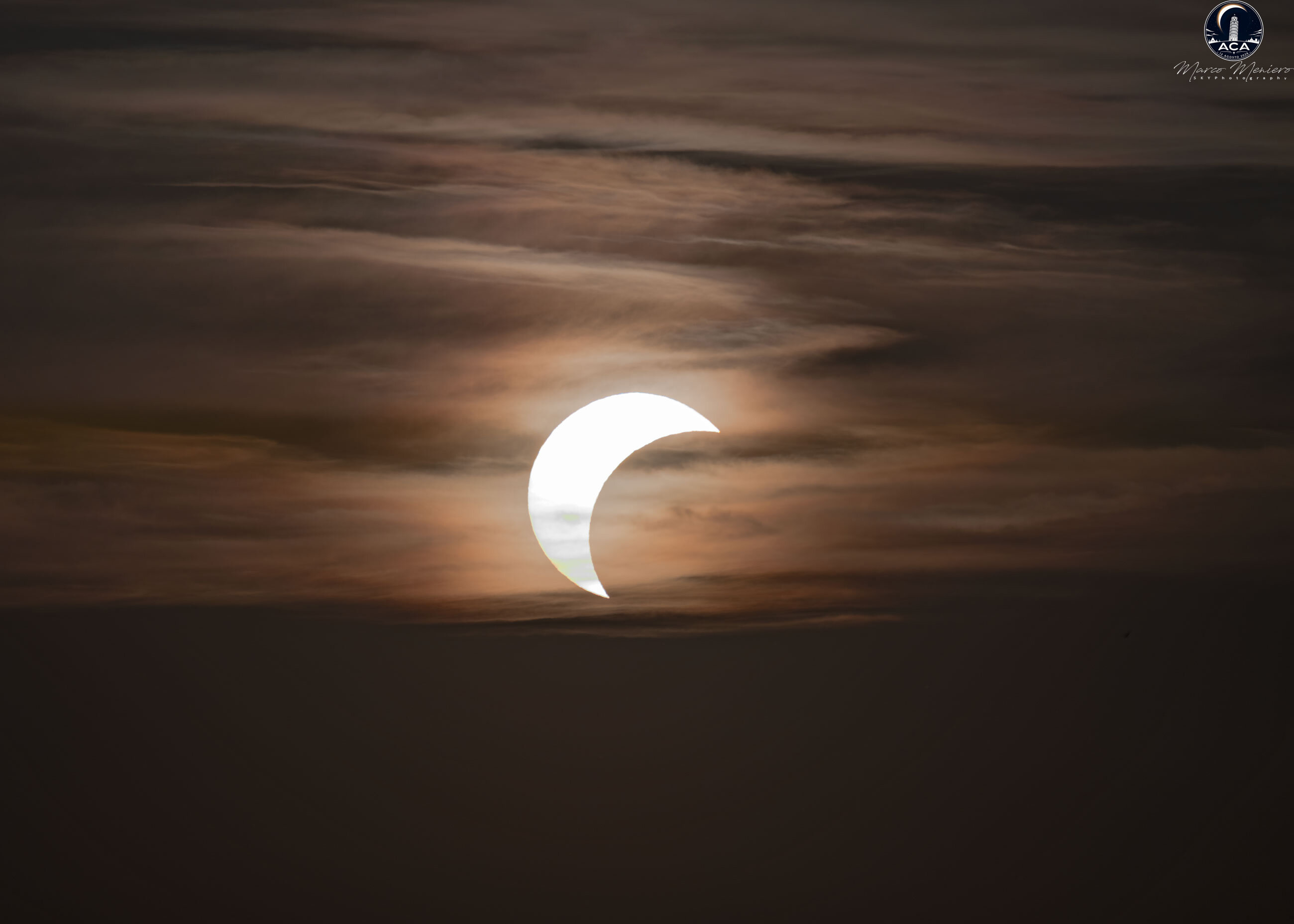
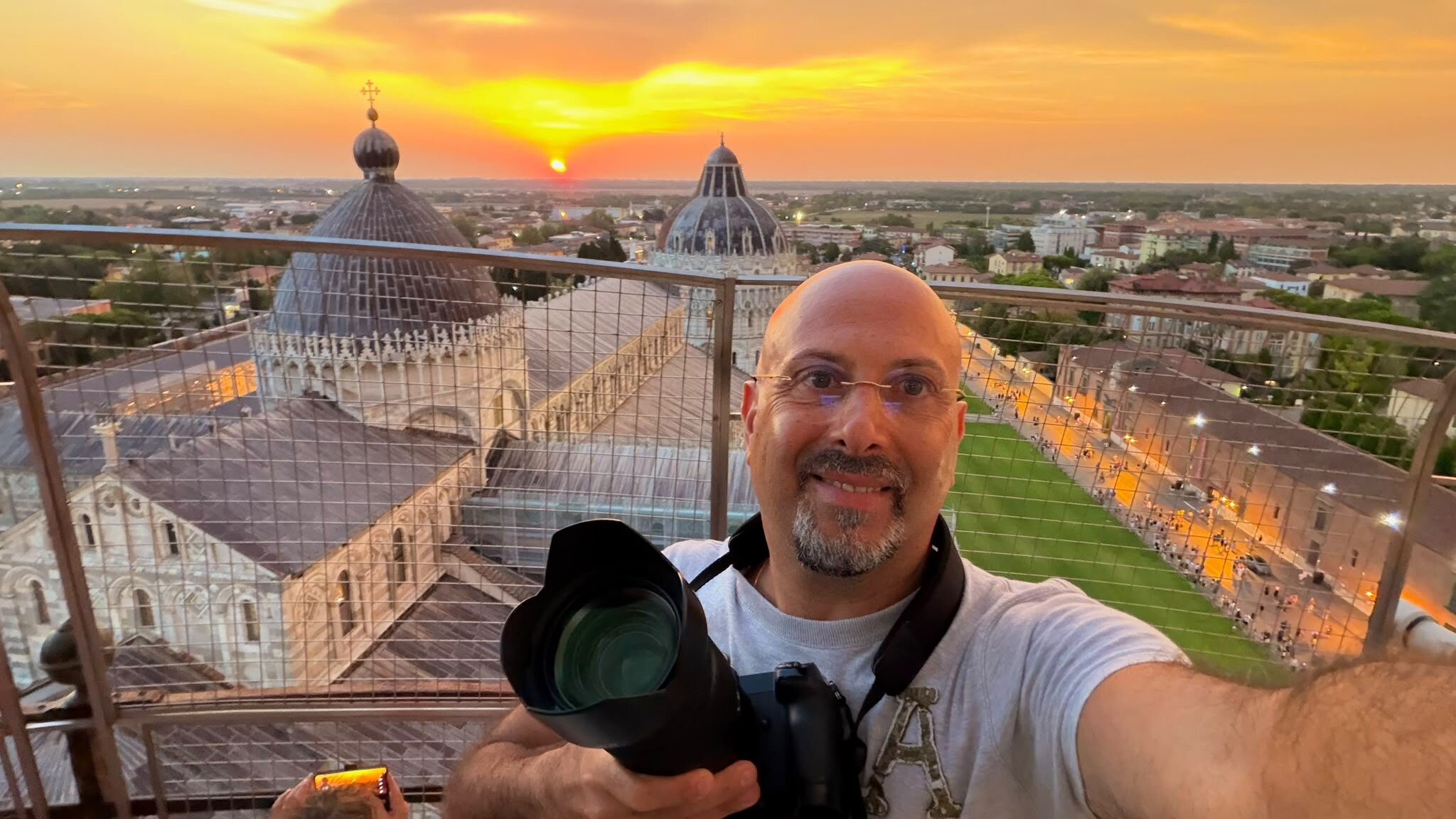
The feat bears the signature of the Associazione Cascinese Astrofili (ACA) which, last 12 August, in collaboration with the Opera della Primaziale Pisana (OPA) and astrophotographer Marco Meniero, turned the famous bell tower into an extraordinary, one-of-a-kind observatory for the long-awaited solar eclipse. A unique event, conceived to document the solar disk as it set over the Tyrrhenian Sea and to make science outreach accessible to an ever wider audience.
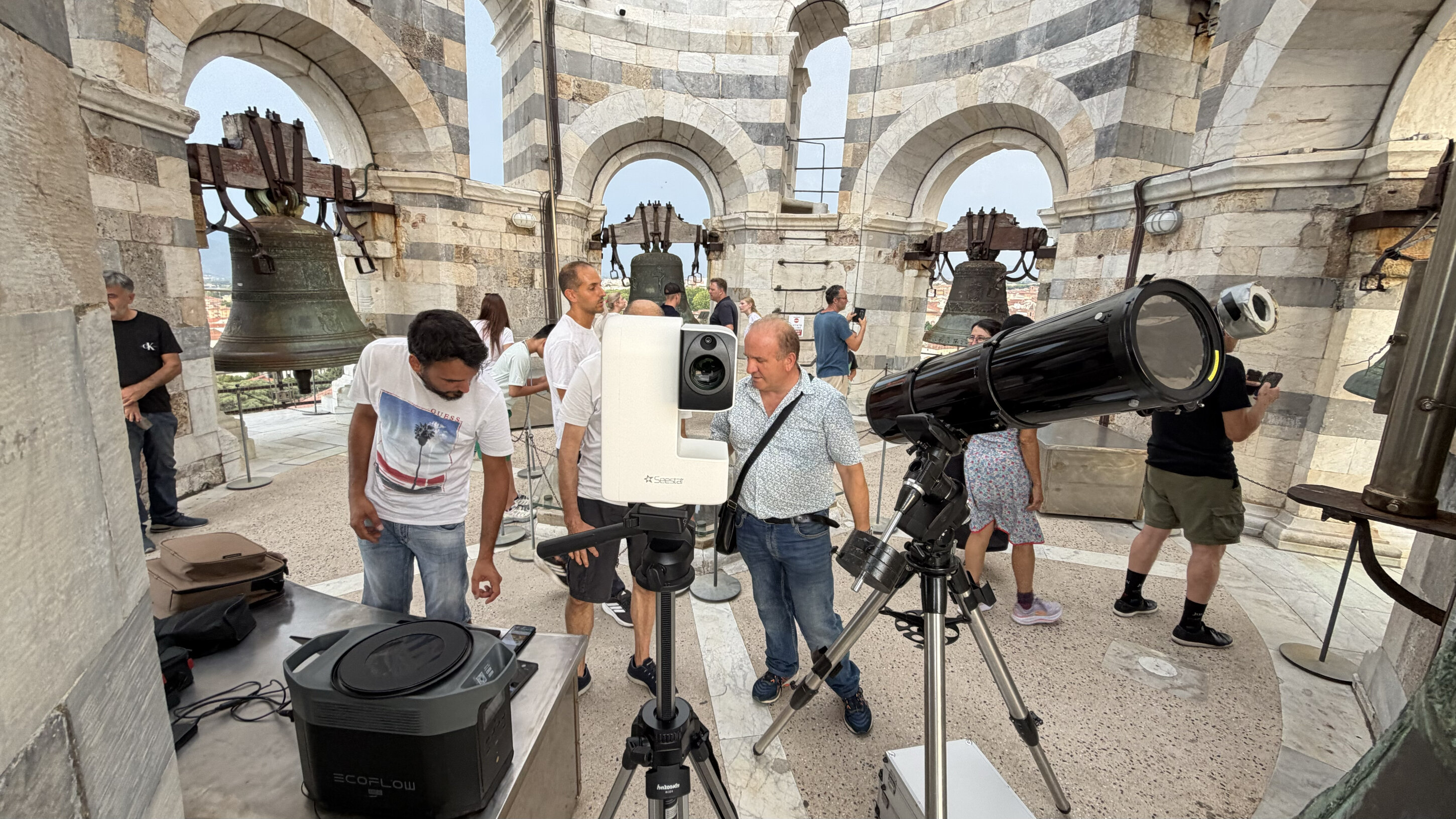
At the top of the monument, the team made up of ACA president Domenico Antonacci, members Fausto Rossi, Giuseppe Di Grazia, Ilaria Della Volpe, Cesare Garofalo, Marco Gargani and astrophotographer Marco Meniero, set up an articulated technical array: a Seestar 30 robotic telescope for live streaming, a 200mm f/5 Newtonian on a GT Advanced mount for visual observing by attendees, and a 72mm SkyWatcher refractor dedicated to photographic shots.
The initiative combined the thrill of observing with a rigorous educational and social program. Before the celestial event, the OPA’s Toniolo Hall hosted a scientific conference curated by professors Massimiliano Razzano and Claudio Casini of the University of Pisa. With full inclusivity in mind, the venue was equipped with sensory stations and tactile materials designed to allow enjoyment of the event also by blind and visually impaired people.
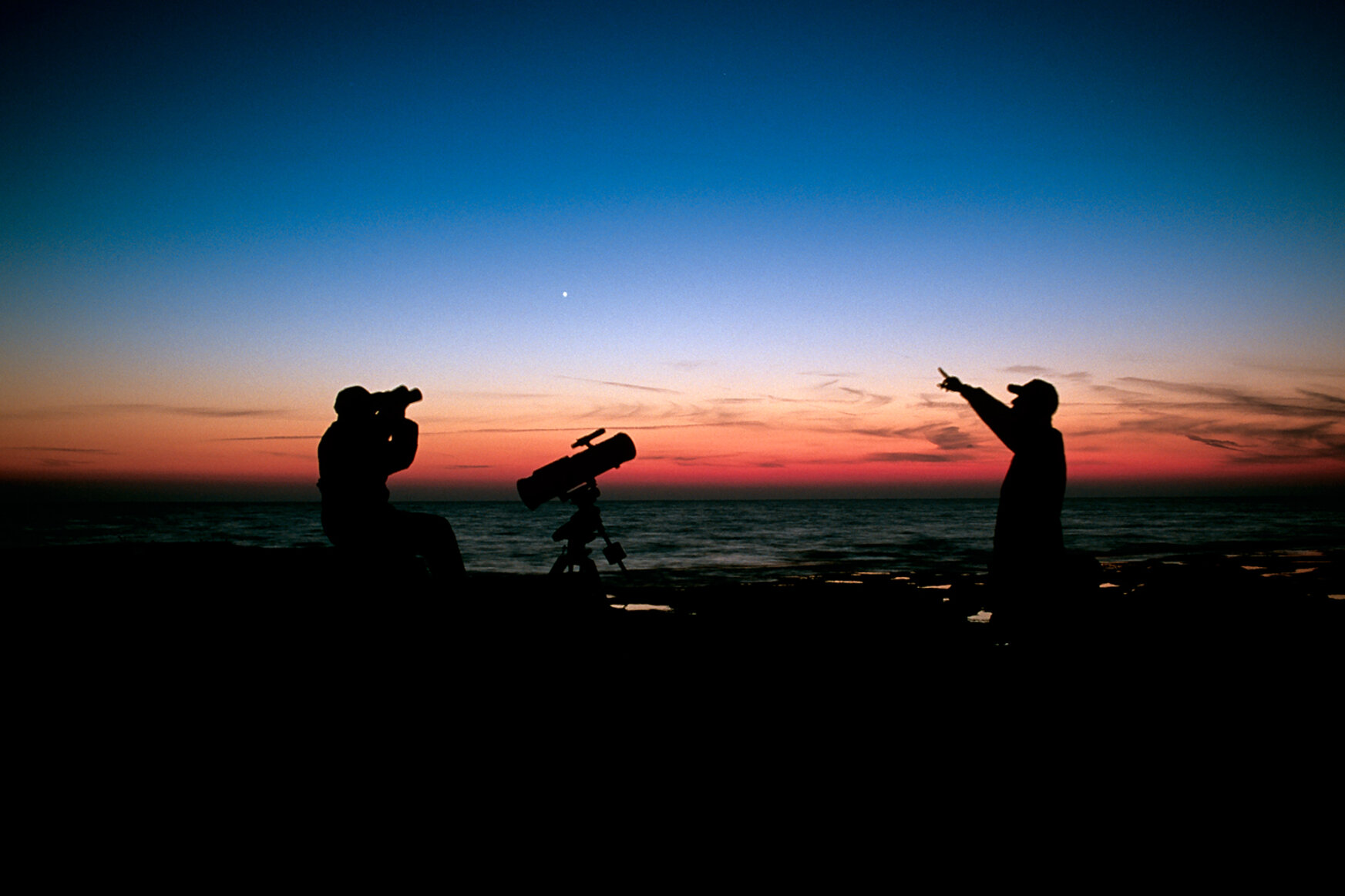
Under the direction of physicist and amateur astronomer Francesco Pellegrini, the Conference Hall of the Opera Primaziale coordinated a true live-streaming network. On the big screens flowed images coming not only from the Tower, but also from the Marina di Pisa shoreline — with the participation of the Associazione Astrofili Alta Valdera (AAAV) and the Gruppo Astrofili Montagna Pistoiese (GAMP) —, from Menorca for the totality phase, and from the national channels of the Unione Astrofili Italiani (UAI) in synergy with INAF and several local associations (GAB of Benevento, APA of Latina, ATA del Tuscolo).
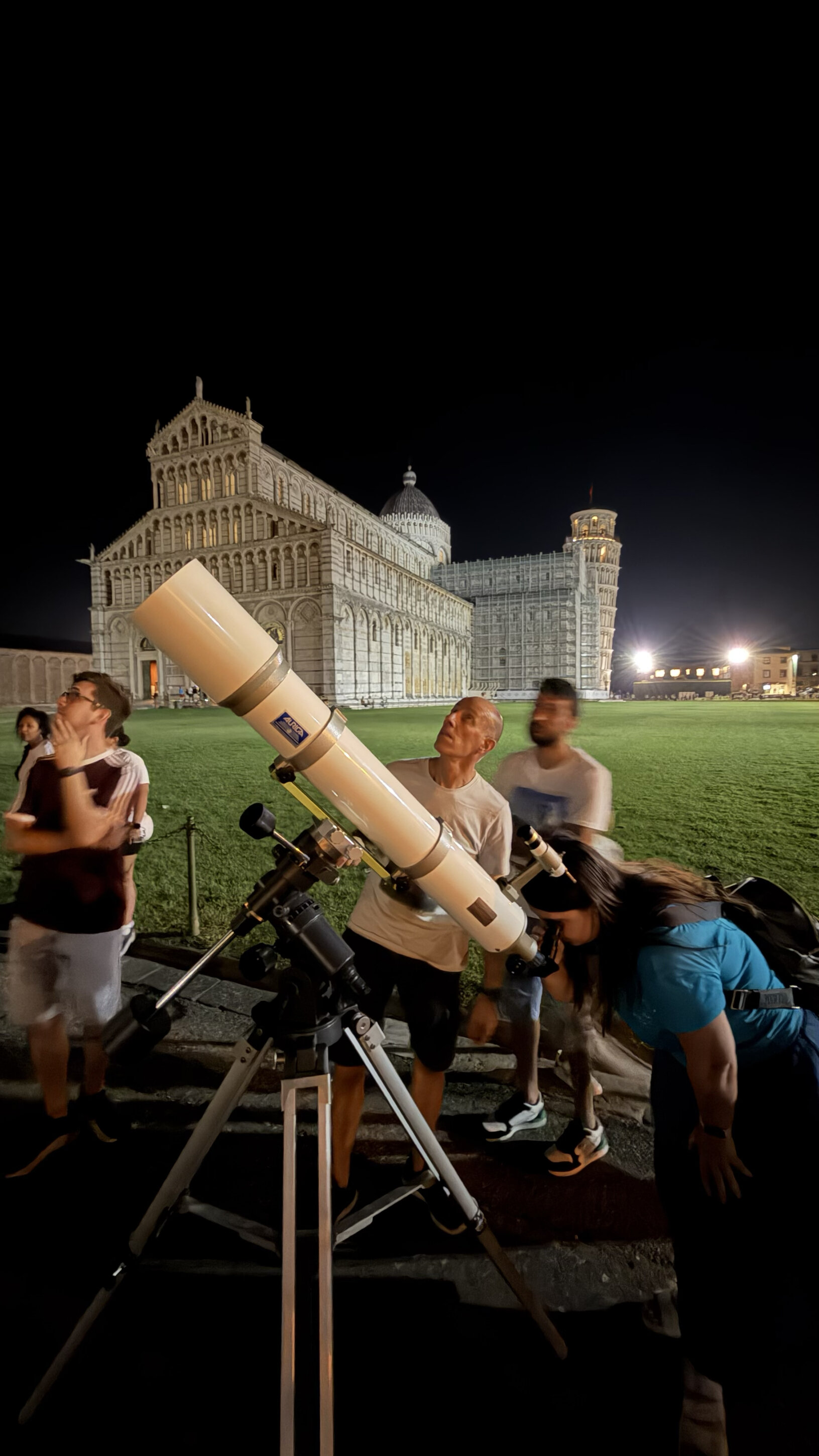
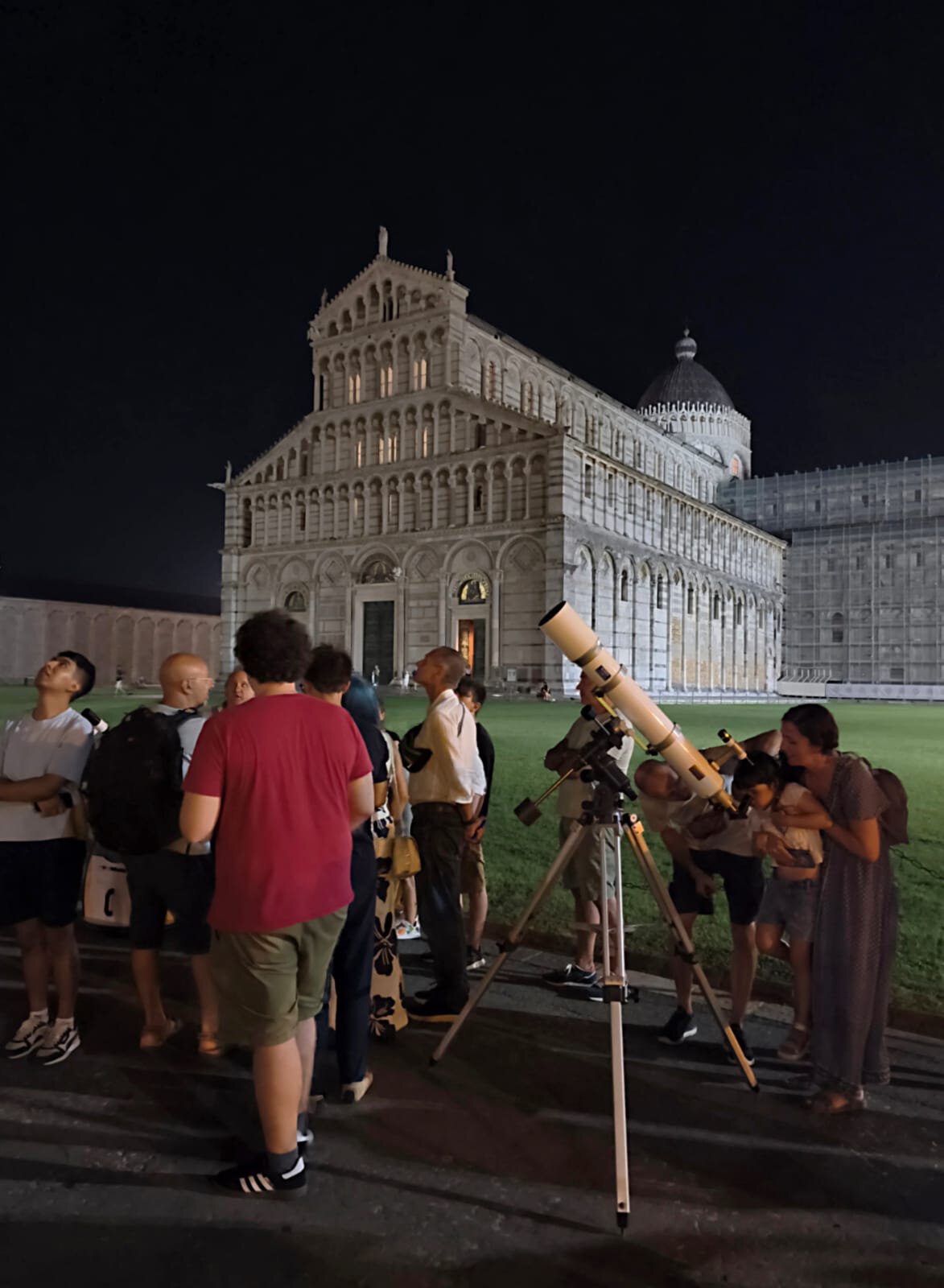
To round off the day, as night fell science came straight down into Piazza dei Miracoli: ACA amateur astronomers made their instruments available to the public for observing the starry vault and the Perseid meteor shower.
Bibliografia nei testi consigliati


