
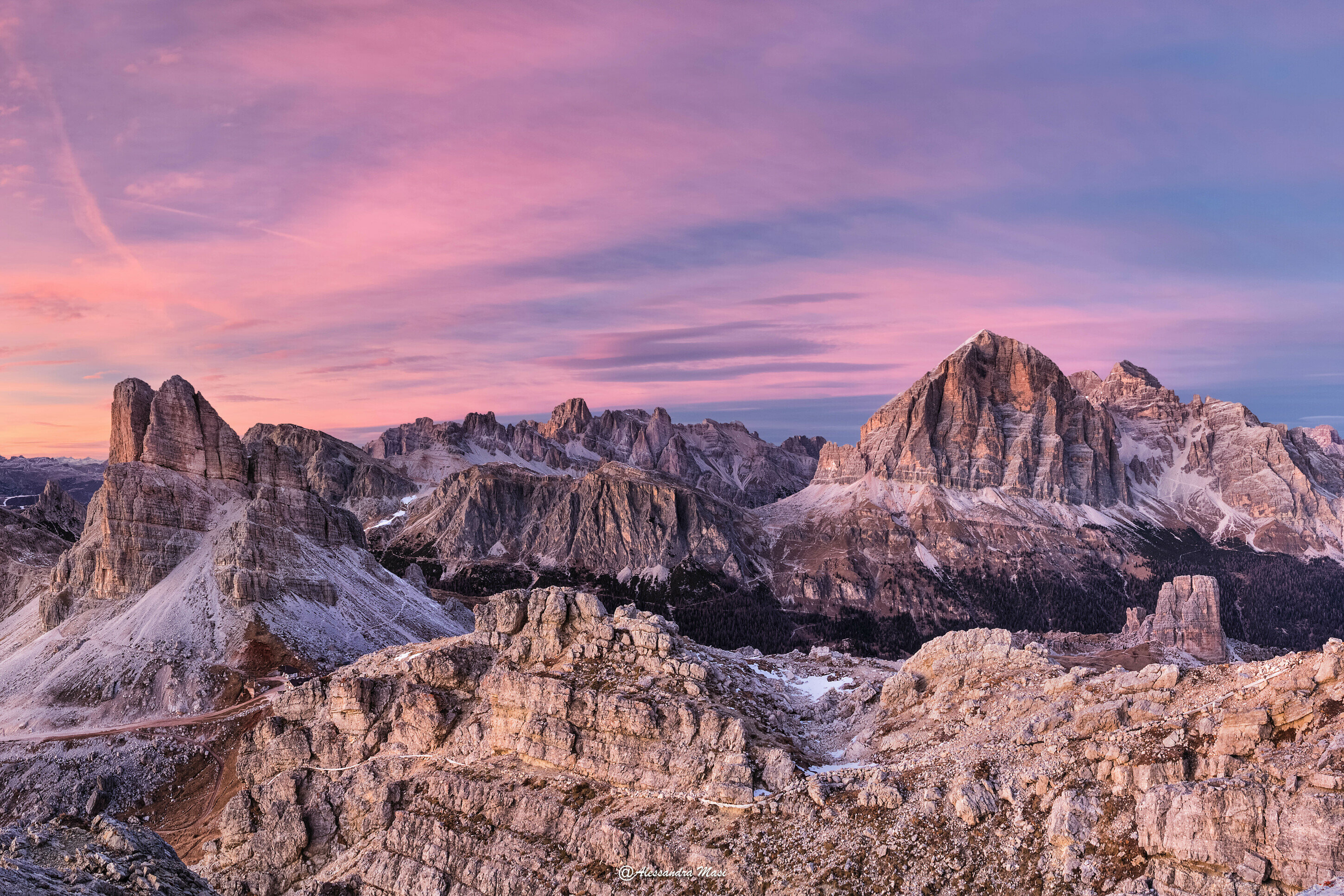
Photo by Alessandra Masi
The Enrosadira is a striking natural phenomenon typical above all of the Dolomites, during which the walls and peaks of the mountains are tinted pink, red, orange and sometimes violet. The name comes from Ladin and means, roughly, “to turn pink”.
The phenomenon is seen mainly at dawn and at sunset, when the Sun is very low on the horizon. Even after the Sun has set for us, its rays can still reach the highest peaks, which sit at a higher altitude and therefore remain lit.
Sunlight, passing through the atmosphere, is altered and scattered. When the Sun is near the horizon, its light must cross a thicker layer of atmosphere and blue tones are scattered more, while the red and orange components manage to prevail. These hues reflect off the mountain rocks, creating the characteristic rosy color.
The effect becomes especially spectacular when the lit mountains stand in contrast with the now-dark sky and with the advancing cone of shadow over the valleys. For this reason it may seem that the peaks are lit by an almost “internal” light, while everything around them is already in shadow.
Enrosadira, however, does not always look the same. The colors and their intensity change depending on several factors, such as cloud cover, the amount of humidity and particles in the atmosphere, the season and the Sun’s position. On some days the mountains may appear a delicate pink, while on others they take on much stronger shades, from red to orange and violet.
In essence, Enrosadira is the result of the meeting of sunlight, the atmosphere and the mountain rocks. It is a short-lived natural phenomenon, but precisely its variability makes it different and spectacular every time.
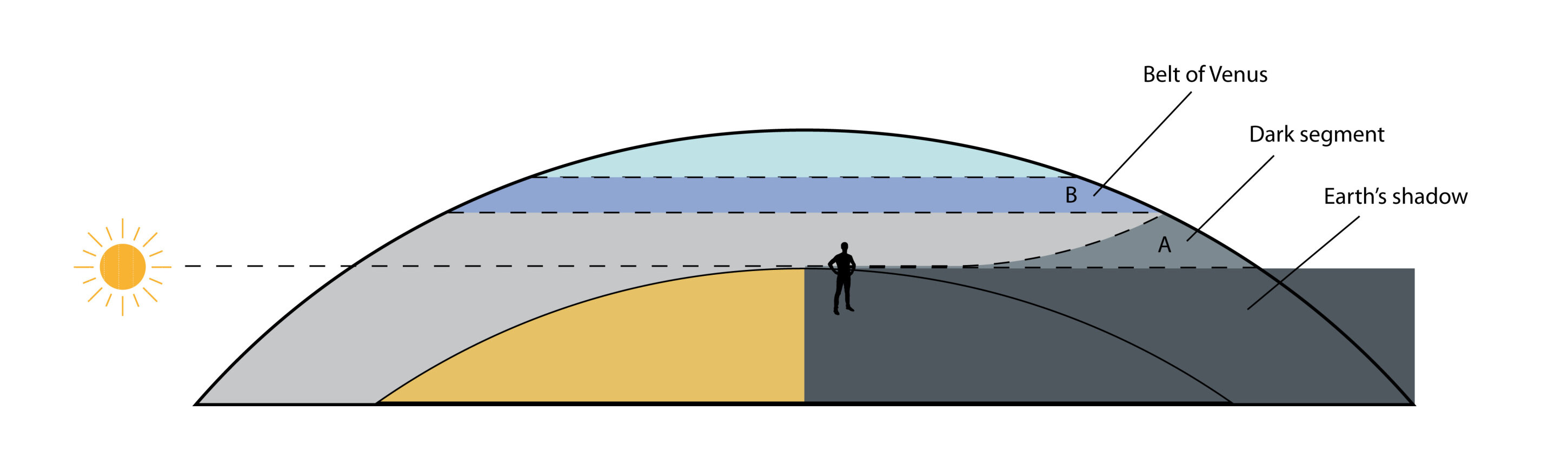
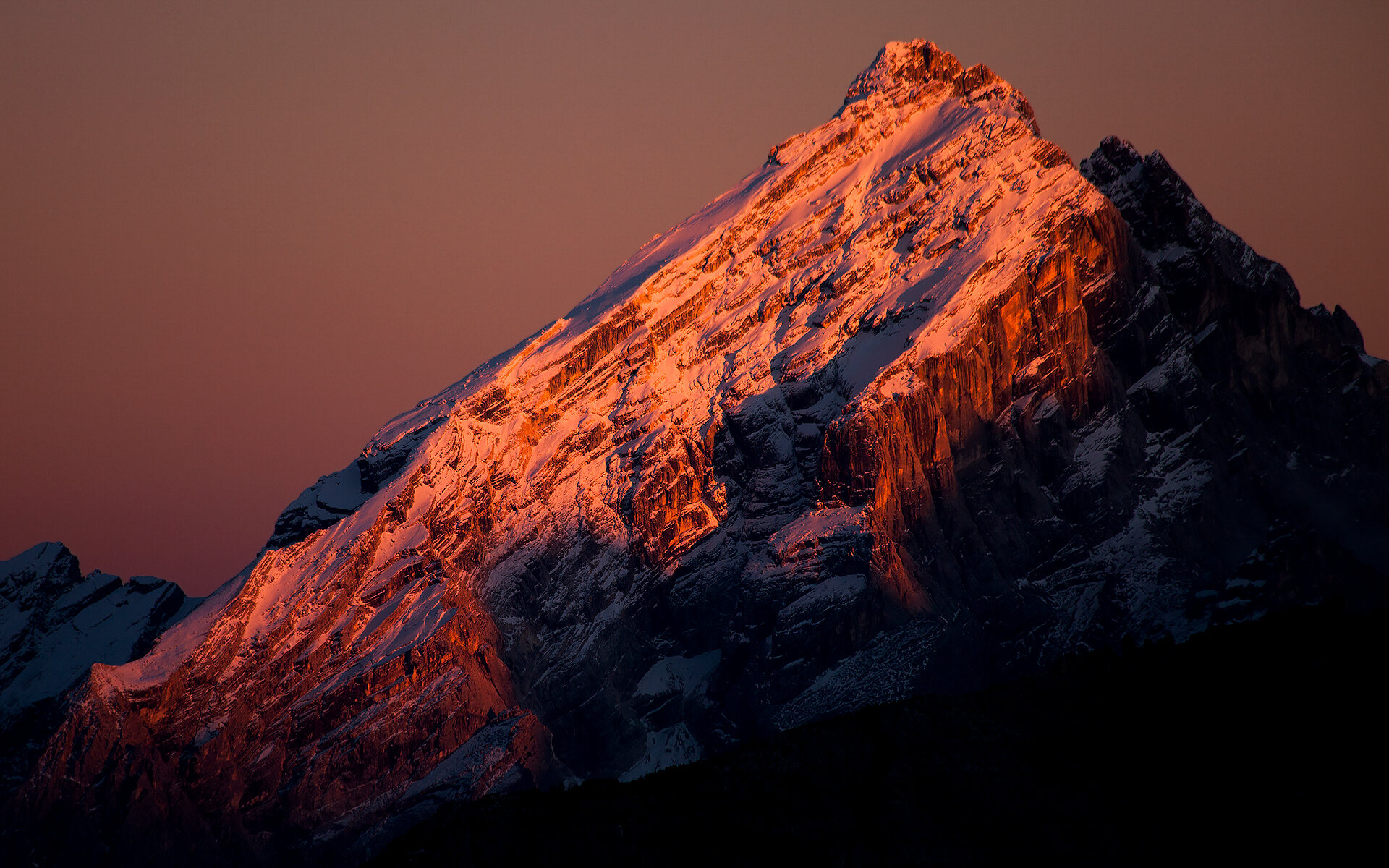
Photo by Michele Galice
Guide to sky colors
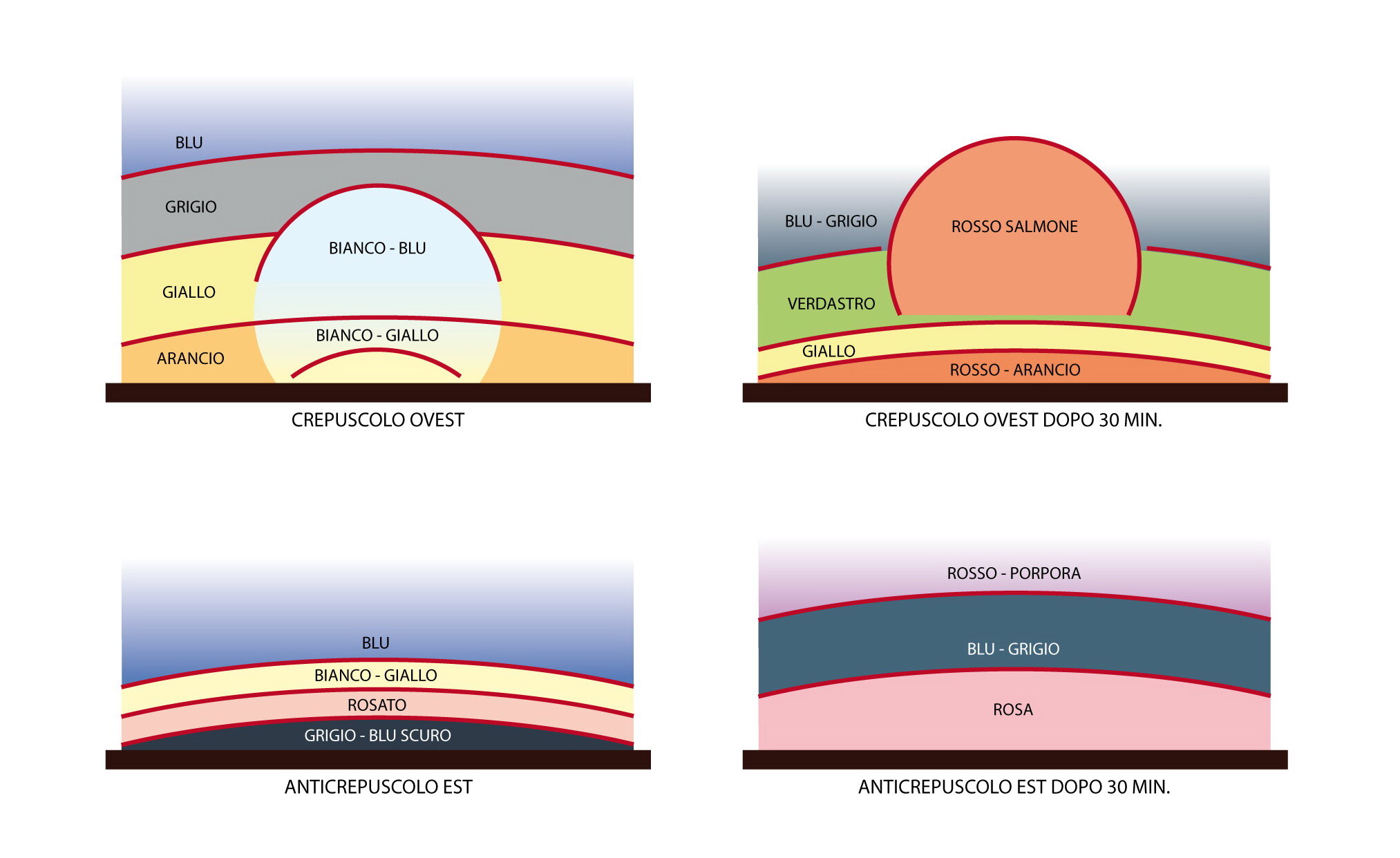
Sun +5° above the horizon: in the East the sky turns pinkish; in the West it turns yellow. Sun on the horizon: in the East the Earth’s blue Cone of Shadow rises beneath the pink anti-twilight arch; in the West the Sun sets.
Sun at -2° below the horizon: in the East the Cone of Shadow is clearly visible and the anti-twilight arch appears very bright; in the West the twilight arch is very bright and you can’t make out the point where the Sun set.
Sun at -5° below the horizon: the Cone of Shadow is very diffuse and the anti-twilight arch begins to fade; in the West the Purple Light (spanning 10°-40°) is very bright and the twilight arch looks orange.
Sun at -6° below the horizon: civil twilight ends, the Cone of Shadow and the anti-twilight arch start to disappear, while Enrosadira is at peak brightness; in the West the purple light begins to fade and the twilight arch looks red.
Sun at -8° below the horizon: Enrosadira fades; in the West the very broad red twilight begins to soften.
Sun at -12° below the horizon: nautical twilight ends; in the West the red twilight continues to soften.
Sun at -18° below the horizon: astronomical twilight ends and zodiacal light begins to appear.
Bibliografia nei testi consigliati