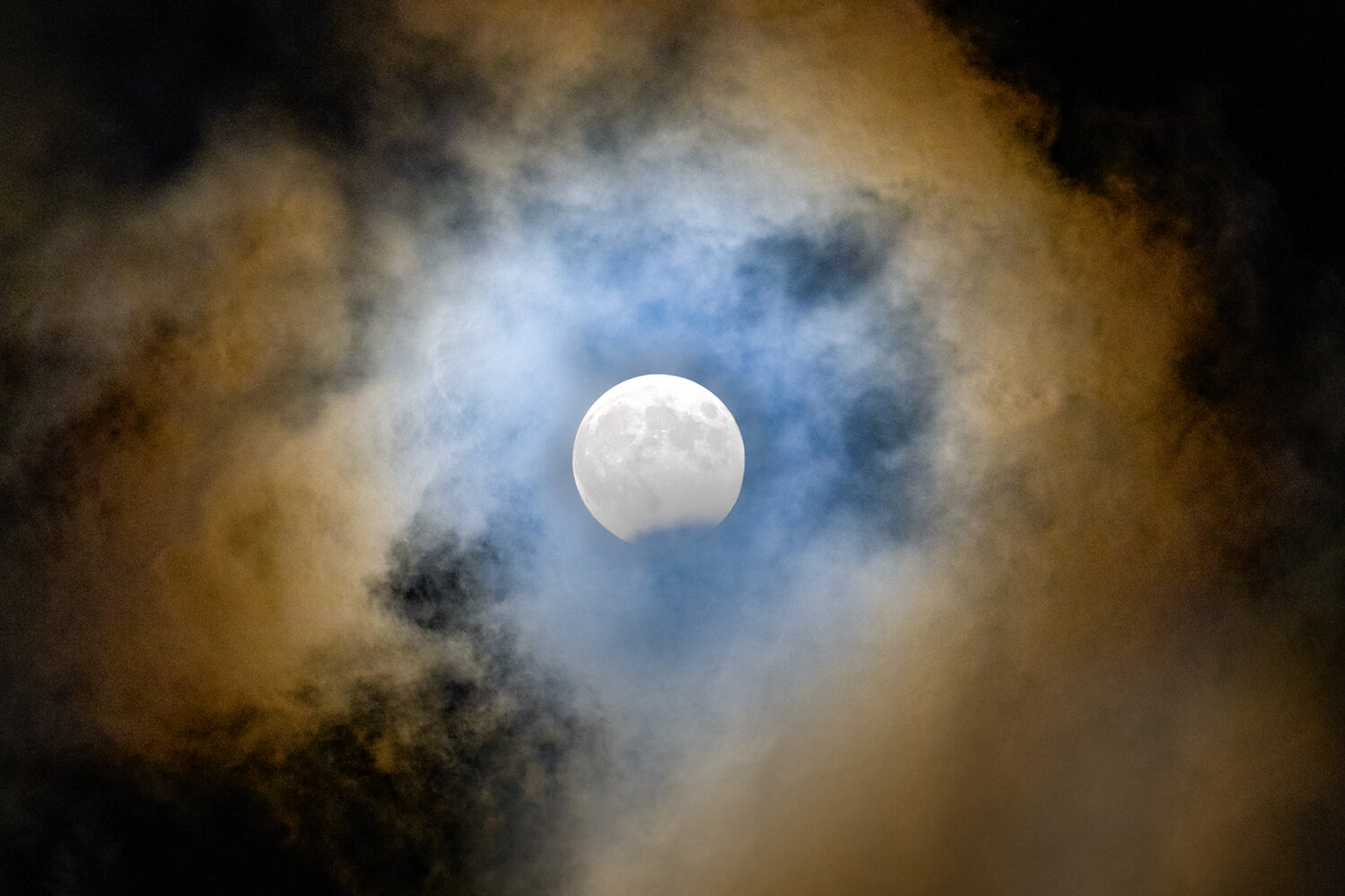

Formation mechanisms of reduced-spectrum rainbows:
White rainbow (fogbow ) and Red Rainbow
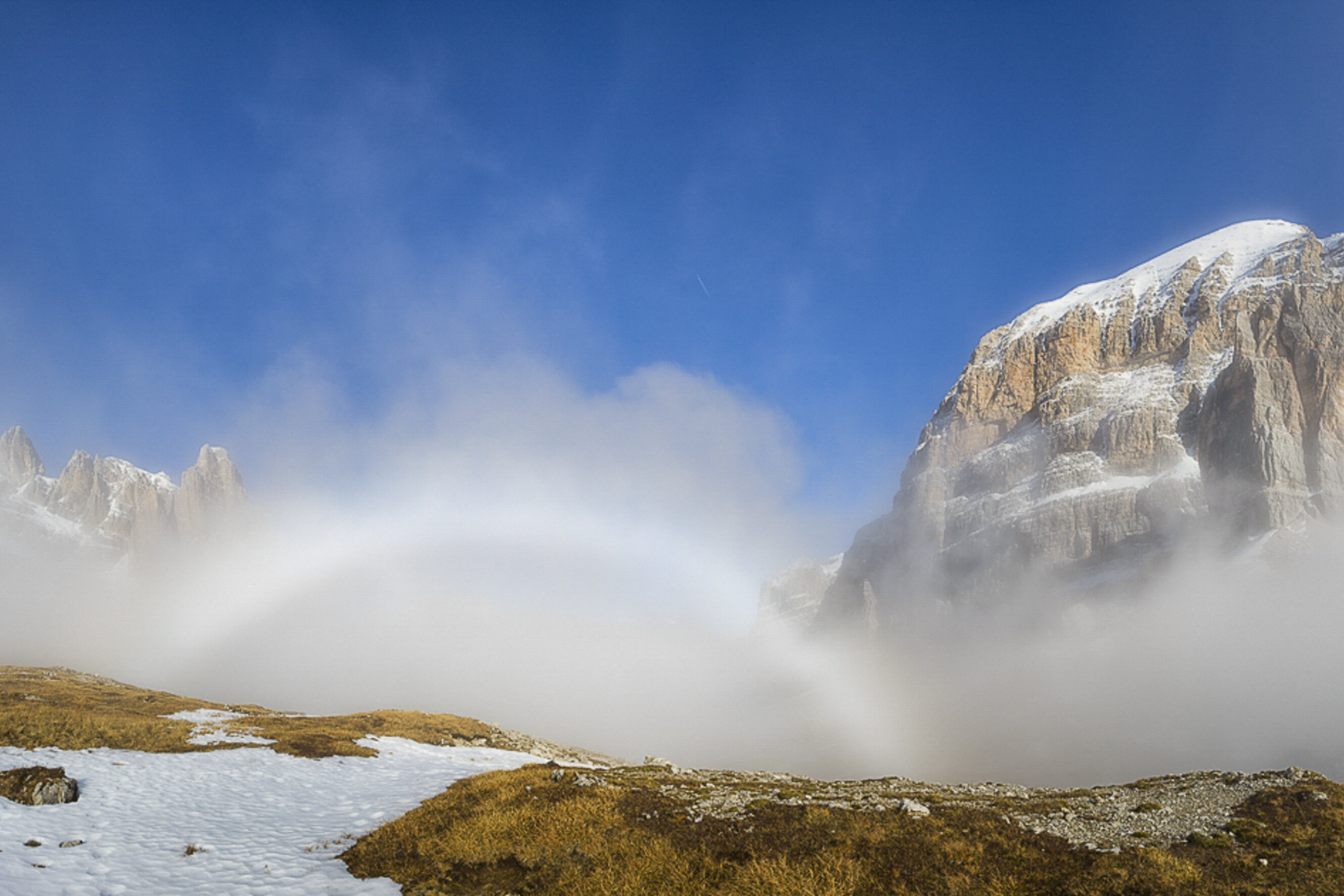
Cloudbow by Alessandra Masi
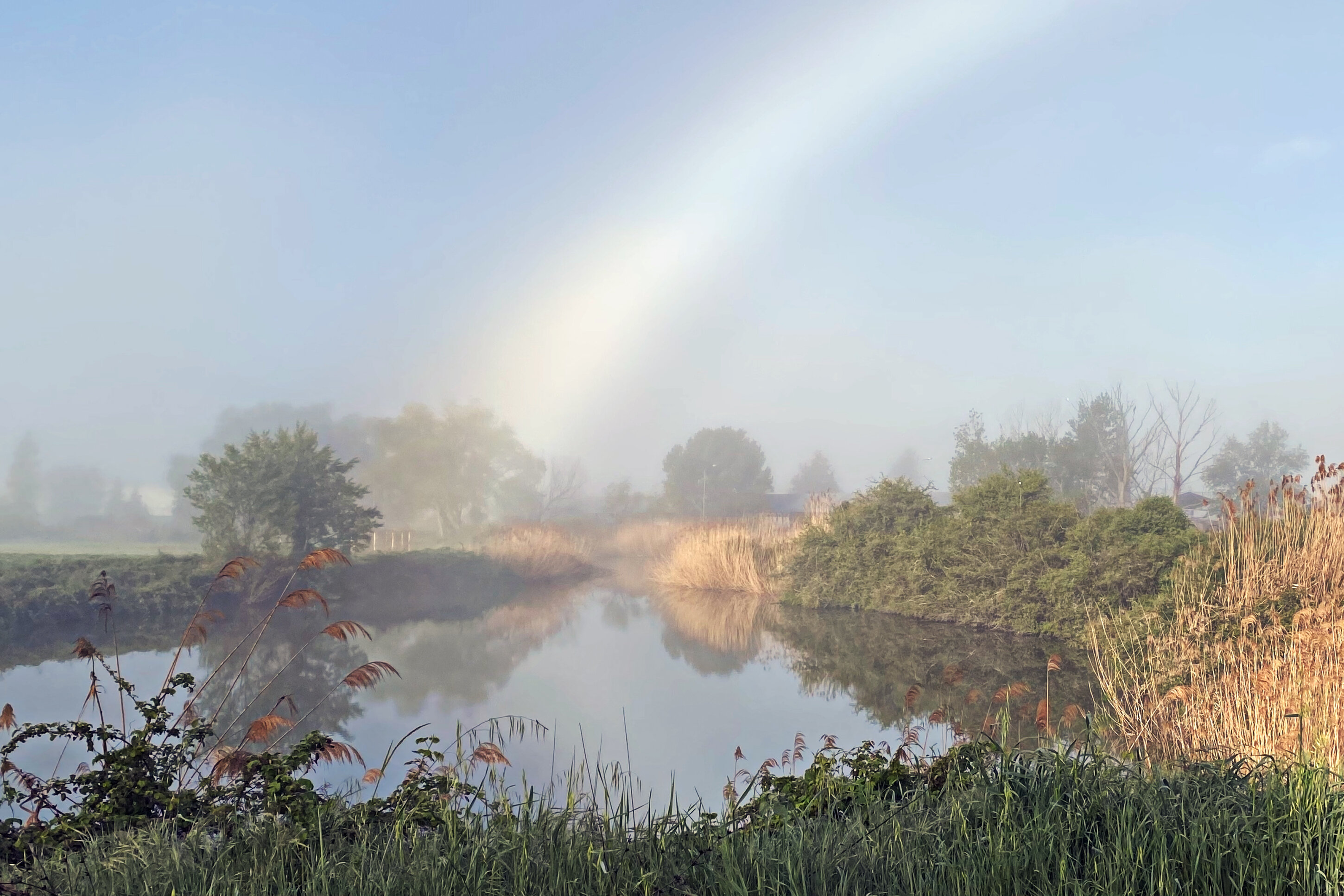
Fogbow
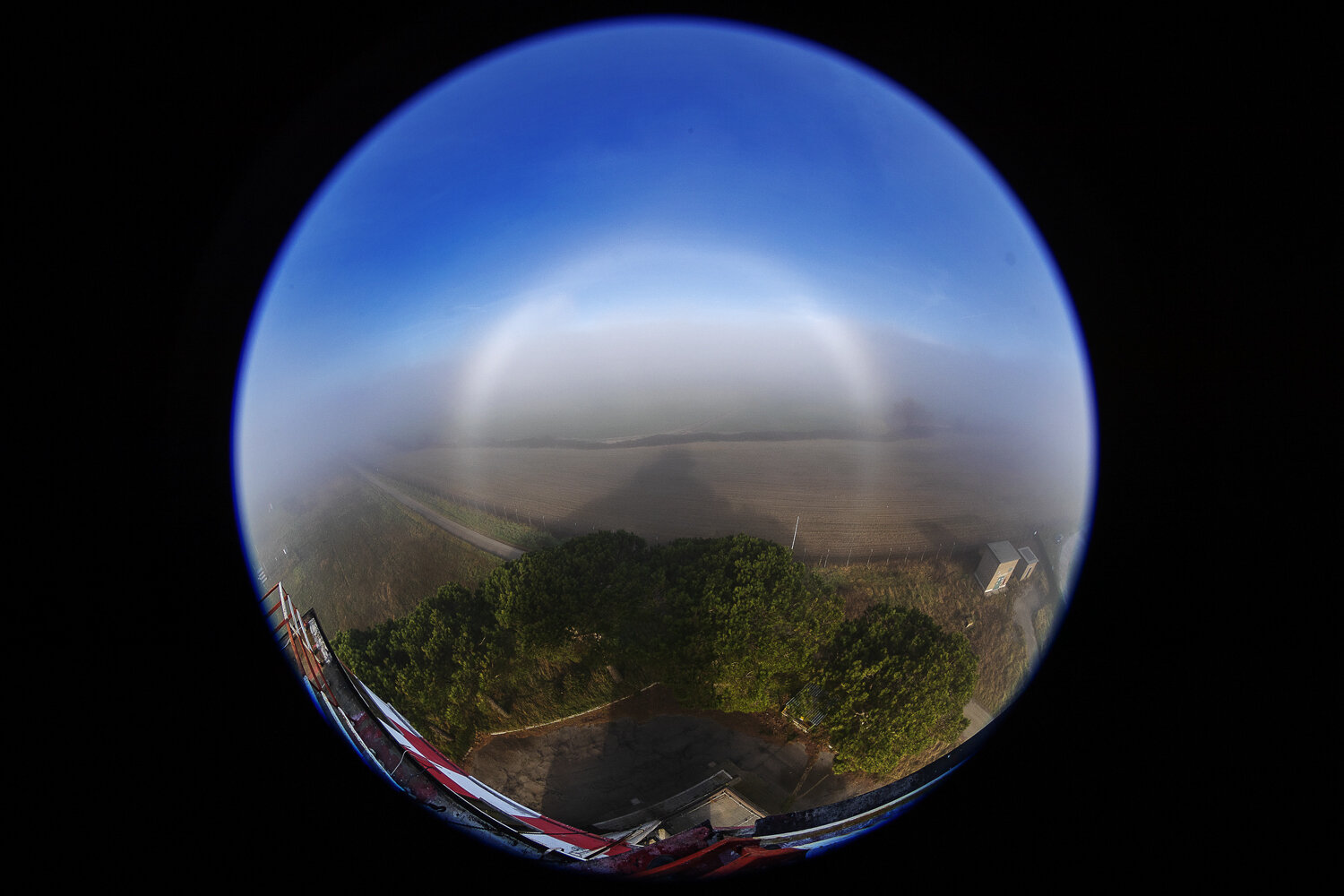
Rainbows are among the best-known atmospheric optics phenomena, produced by the combination of refraction, internal reflection and diffraction of sunlight (or moonlight) within suspended water droplets. However, the spectral morphology of the bow is not constant: as the size of the water drops and the optical path of light in the atmosphere vary, substantial color changes occur, leading to the formation of peculiar structures such as the fogbow , the cloudbow and the red rainbow.
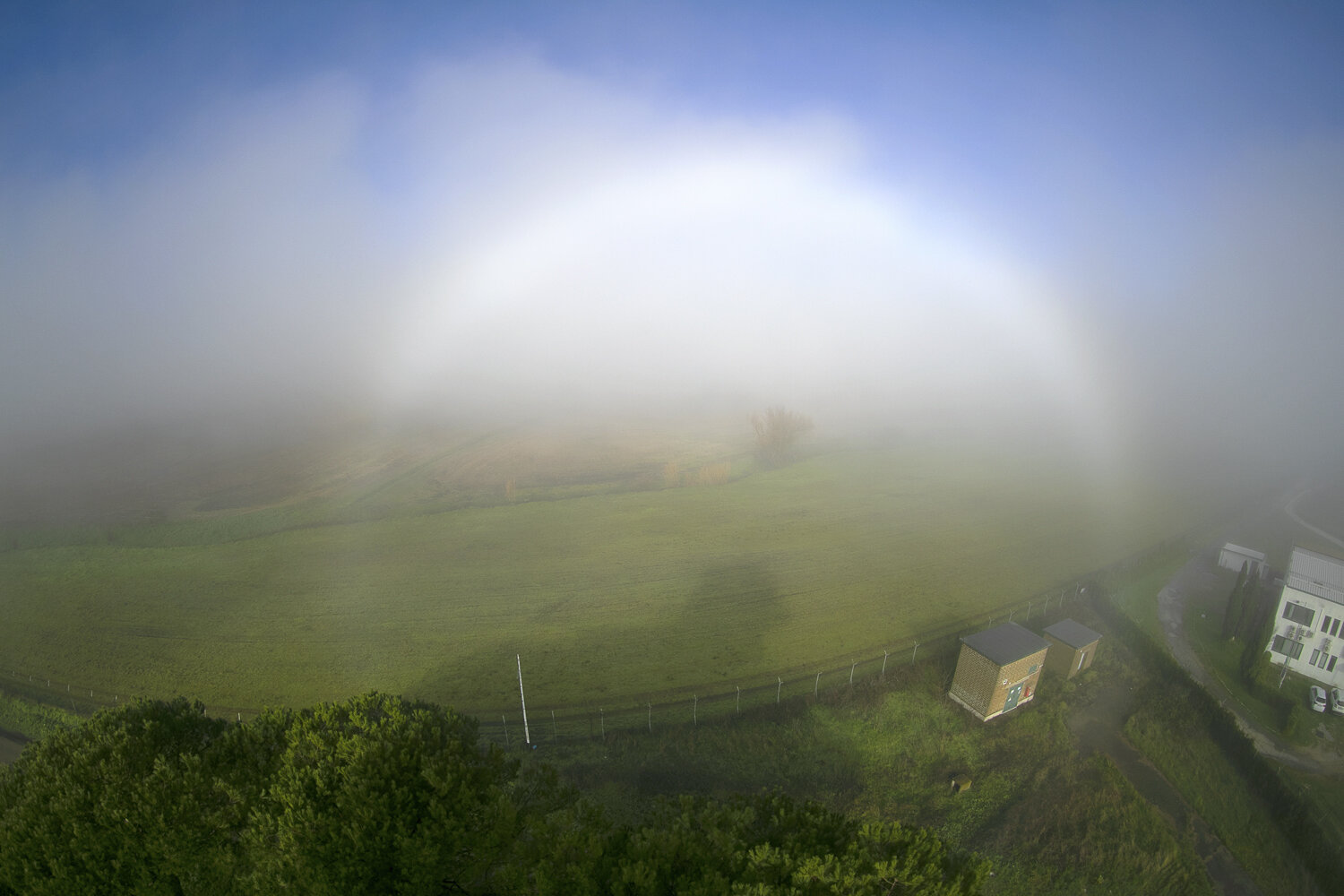
1. The Fogbow and the Cloudbow: diffraction and desaturation overcome refraction
The classical theory of the rainbow, formulated by René Descartes and refined by Thomas Young and Gustav Mie, identifies wave-particle interaction as the key factor for the distribution of brightness and colors along the arc.
- Dependence on droplet diameter:
When light strikes raindrops with large diameters, refraction and chromatic dispersion dominate. The different wavelengths of visible light separate clearly according to Snell's law, producing a sharp arc with highly saturated colors. As the droplet diameter decreases down to values between, diffraction phenomena begin to prevail over refraction. - Transition to the Fogbow:
In fog or stratiform clouds, water droplets typically have a diameter below 0.05mm. With drops of these sizes, diffraction effects broaden the interference maxima and minima of the spectral components. The angular overlap of the different wavelengths becomes such as to recombine the dispersed light into a continuous white spectrum. - Optical morphology:
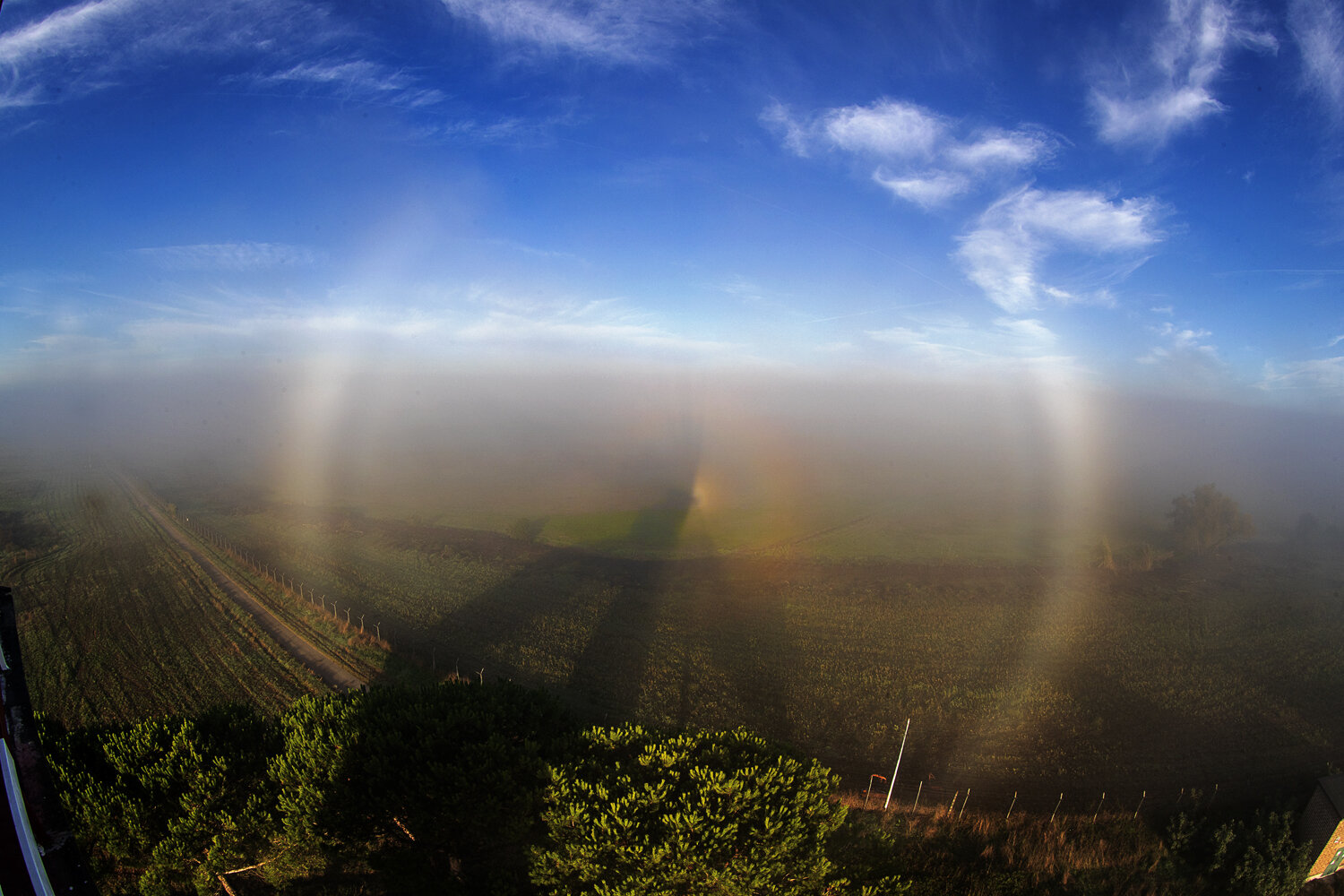
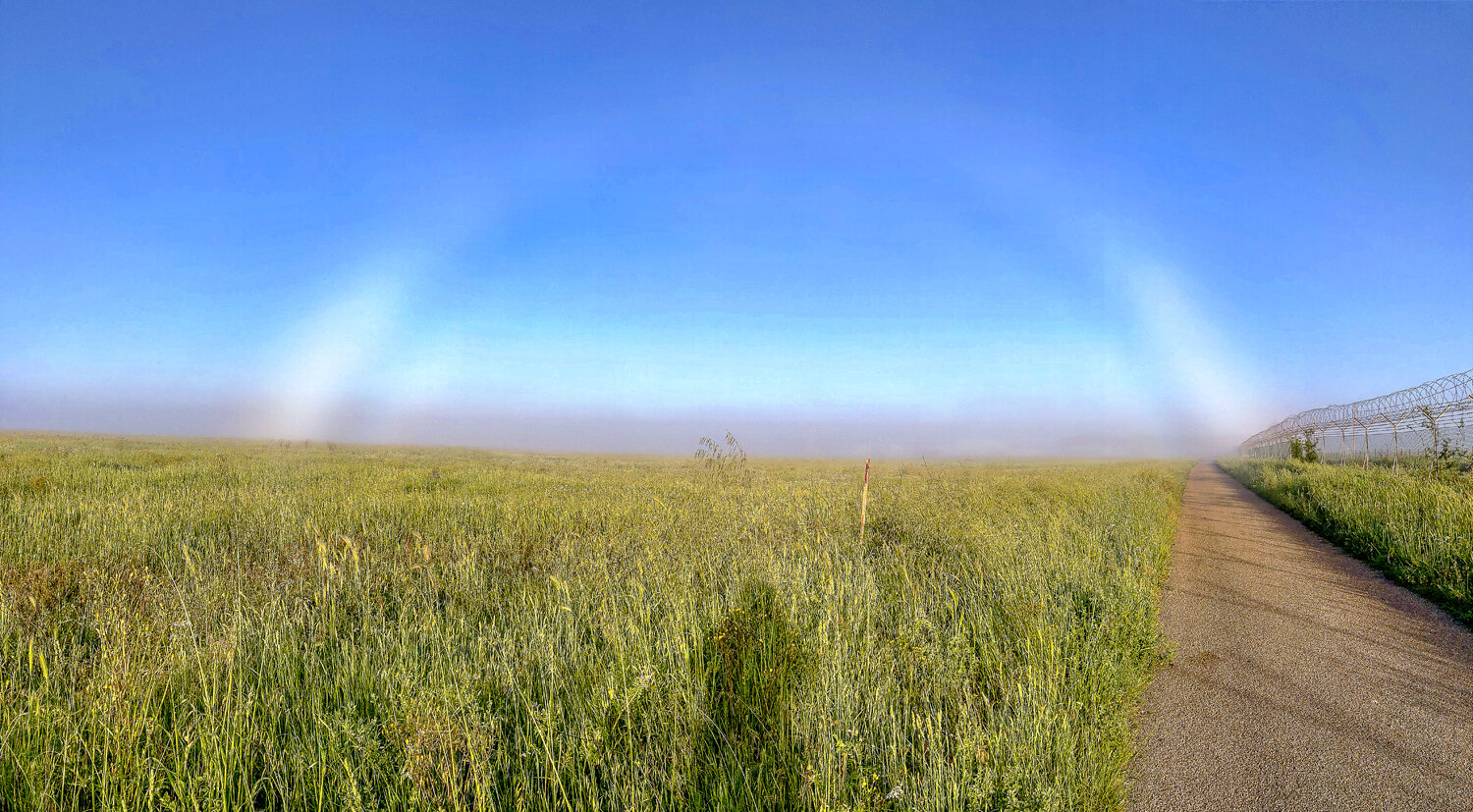
The primary arc loses the classic color separation and appears as a faint whitish band, edged externally by a very slight reddish tint and internally by a pale bluish tone. The overall brightness of a fogbow is markedly reduced, comparable to that of a normal secondary rainbow. If the phenomenon appears in ground fog banks it is called a fogbow, whereas if seen from above over a cloud layer it is known as a cloudbow.
2. The Red Rainbow: selective extinction by Rayleigh and Mie Scattering
The formation of the red rainbow (or monochromatic rainbow) is governed by the transmissive properties of Earth's atmosphere when the Sun (or the Moon) is close to the horizon line (sunrise or sunset).
- Lengthening of the optical path:
With a low solar elevation angle, light rays must pass through an atmospheric thickness (air mass) much greater than during the central hours of the day. Along this long path in the lower layers of the troposphere, light interacts with gas molecules, aerosols and suspended particulate matter. - Scattering:
- Rayleigh scattering: Molecular scattering is inversely proportional to the fourth power of wavelength. As a result, short-wavelength radiation (violet, blue and green) is diffusely scattered out of the direct path toward the raindrops.
- Mie scattering: Tropospheric aerosols enhance the extinction of the high-frequency spectral components.
- Color outcome:
The incident radiation reaching the raindrops is now devoid of the blue-green components and is composed almost exclusively of the longer wavelengths of the visible spectrum (yellow, orange and, mainly, red). When this residual light undergoes normal refraction and internal reflection within the drop, the resulting arc appears completely lacking the cool color bands, standing out in the sky with a clear and intense monochromatic red or purple coloration.
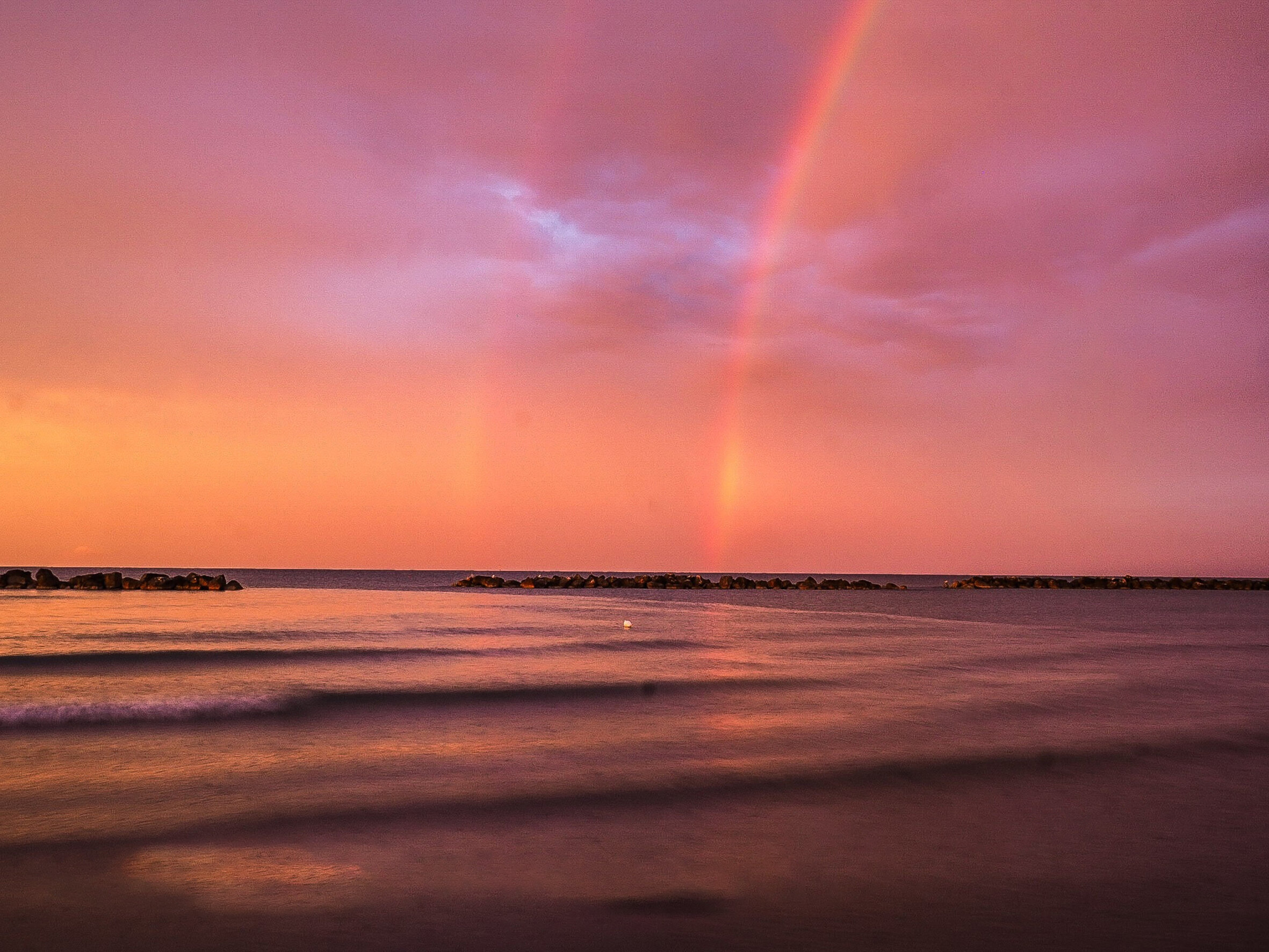
Red rainbow by Katiusha Pederneschi
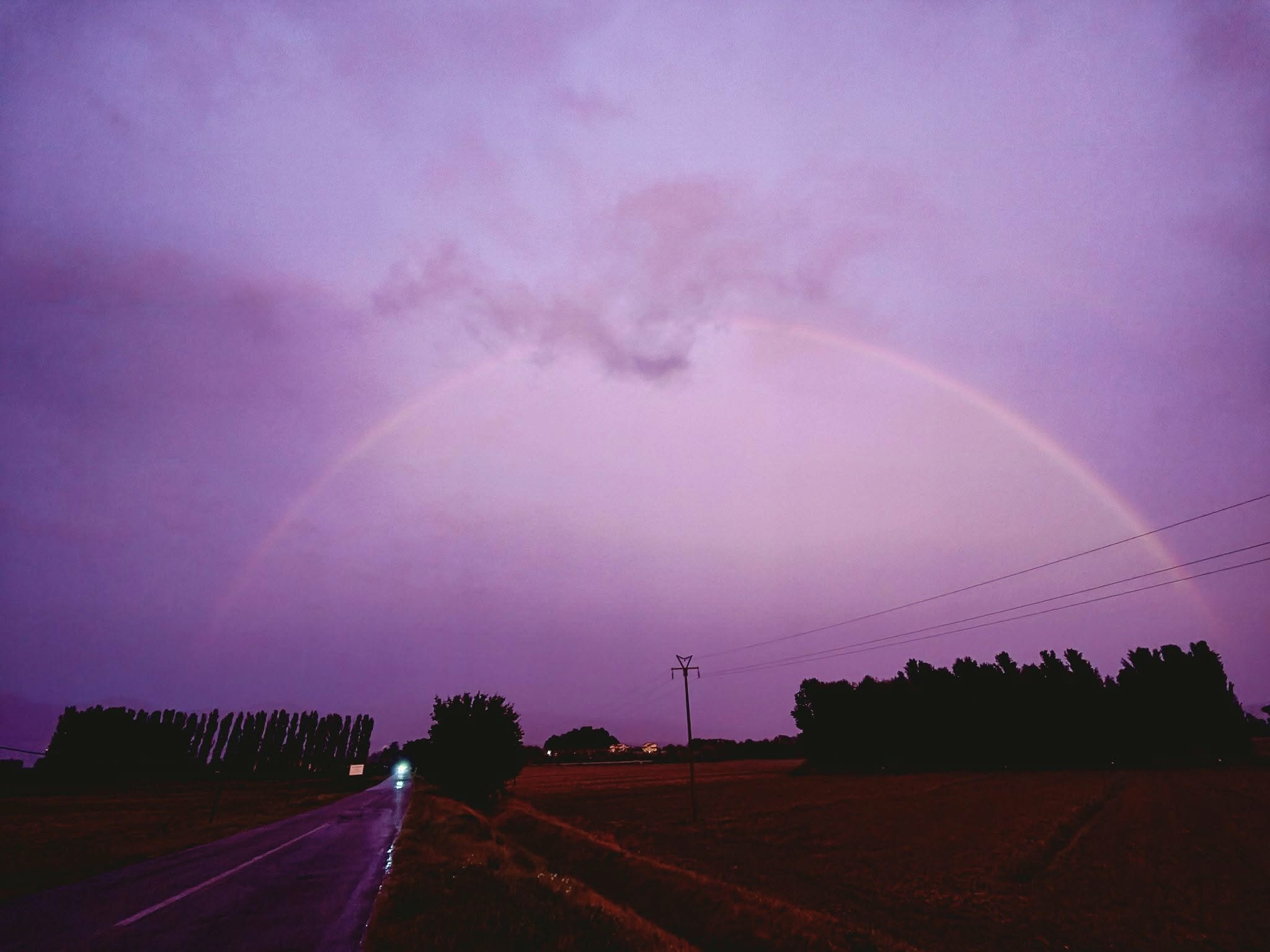
Photo by Stefano Tocchio
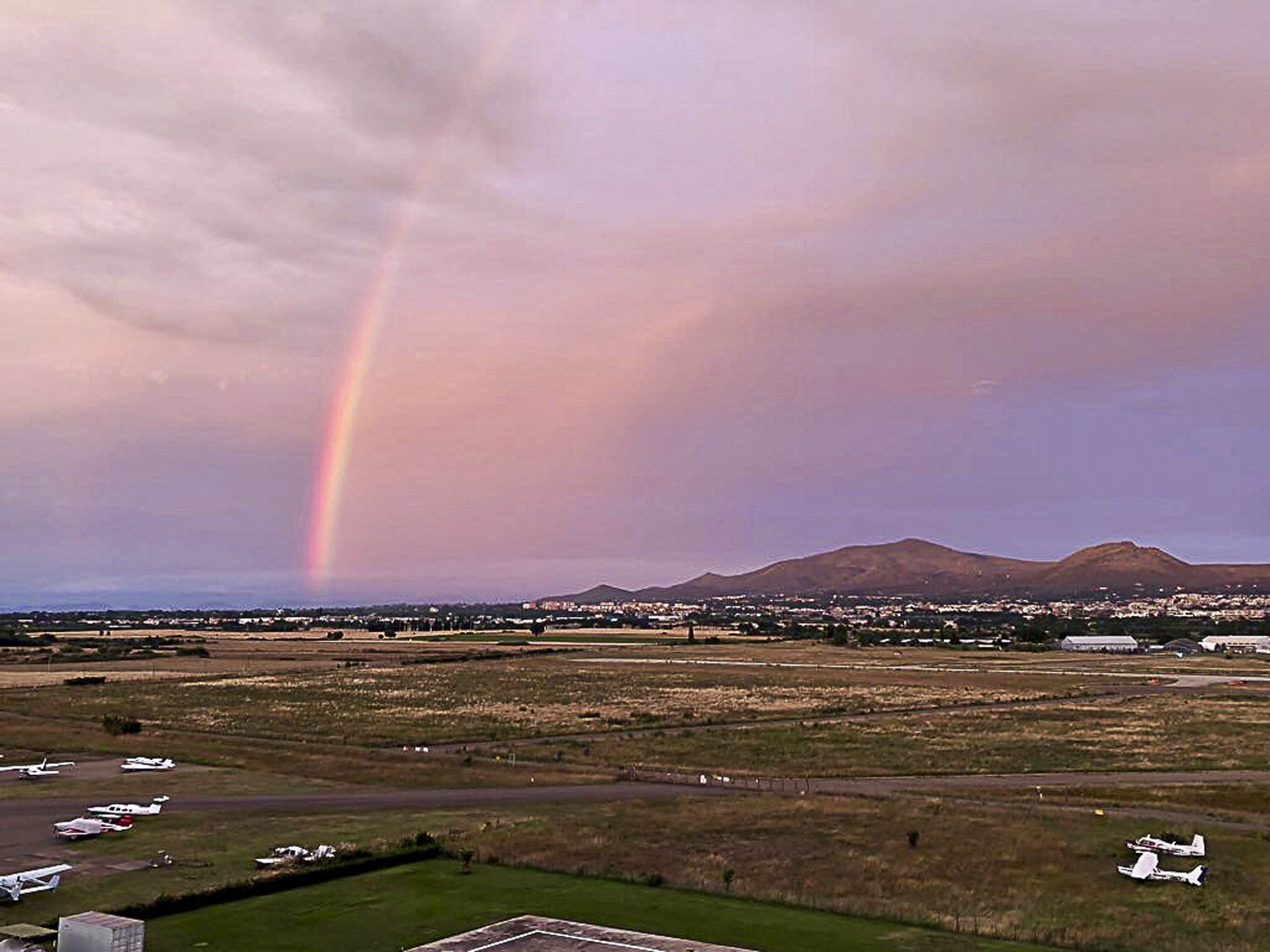
Bibliografia nei testi consigliati