
Halos, sundogs and circumhorizontal arcs:
when ice crystals paint the sky
Looking at the sky on a clear day, you may happen to observe surprising luminous phenomena: large circles around the Sun, colored spots that seem to accompany it, pillars of light or arches with very vivid colors. They are not effects produced by the camera lens nor, even less, mysterious phenomena: they are atmospheric optical phenomena, known as a whole as halo phenomena.
According to the definition of the World Meteorological Organization (WMO), these are phenomena in the form of rings, arcs, pillars or bright spots, produced by the refraction or reflection of light on the ice crystals present in the atmosphere.
Prisms paint the sky
To understand how halos form, you need to picture high clouds, especially cirrus and cirrostratus. Inside them there can be tiny ice crystals, often shaped like columns or thin hexagonal plates.
When sunlight passes through these crystals, it changes direction: this is the phenomenon of refraction. Also, the Sun’s white light is made up of different colors, and each is bent in a slightly different way. It is precisely this separation that produces, under certain conditions, the typical colors of halos.
The geometry of the crystals is crucial. In fact, it’s not enough that there is ice in the atmosphere: what matters too are the shape of the crystals, their orientation, and the height of the Sun above the horizon. That’s why there are so many types of halo phenomena.
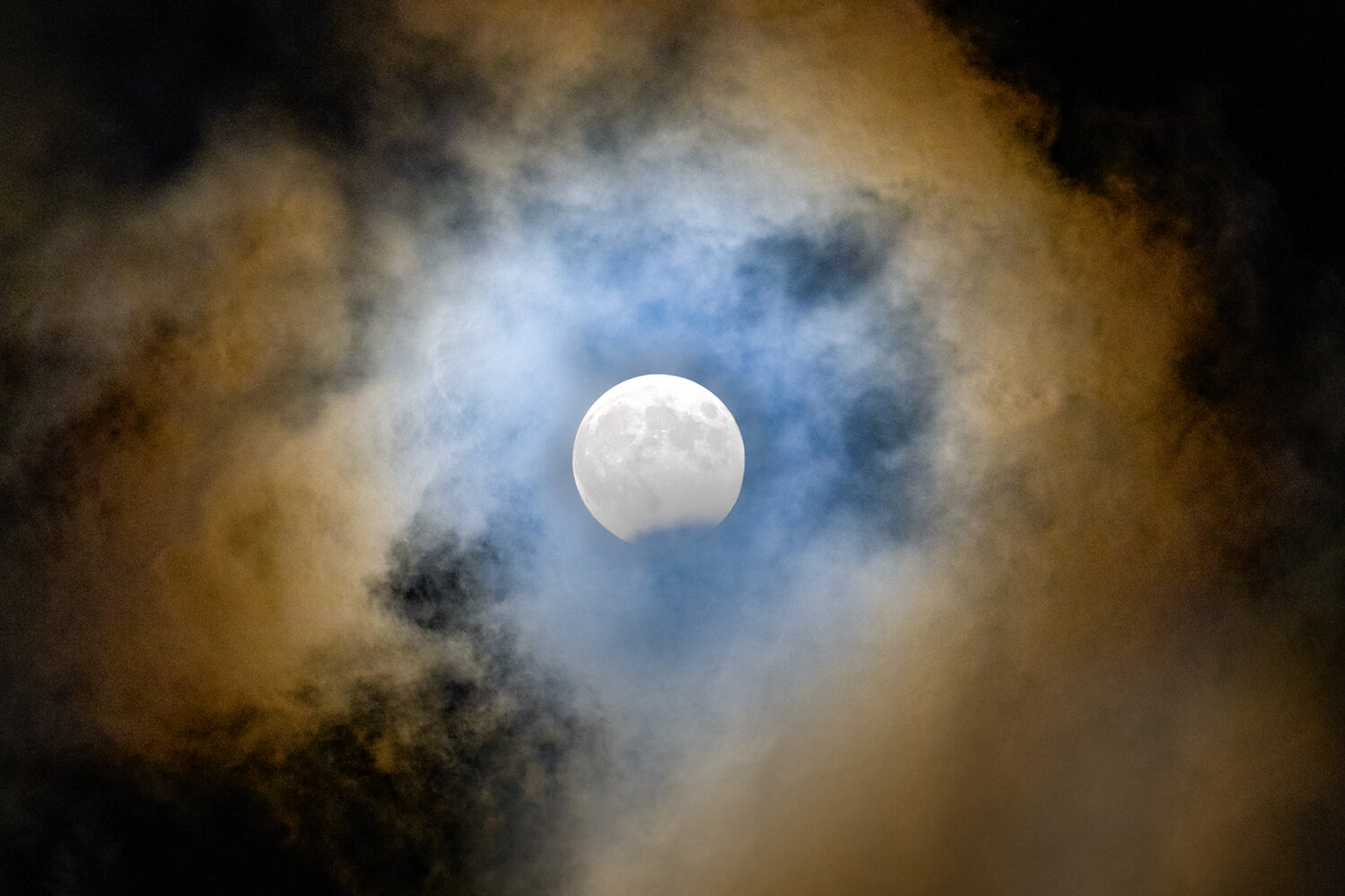
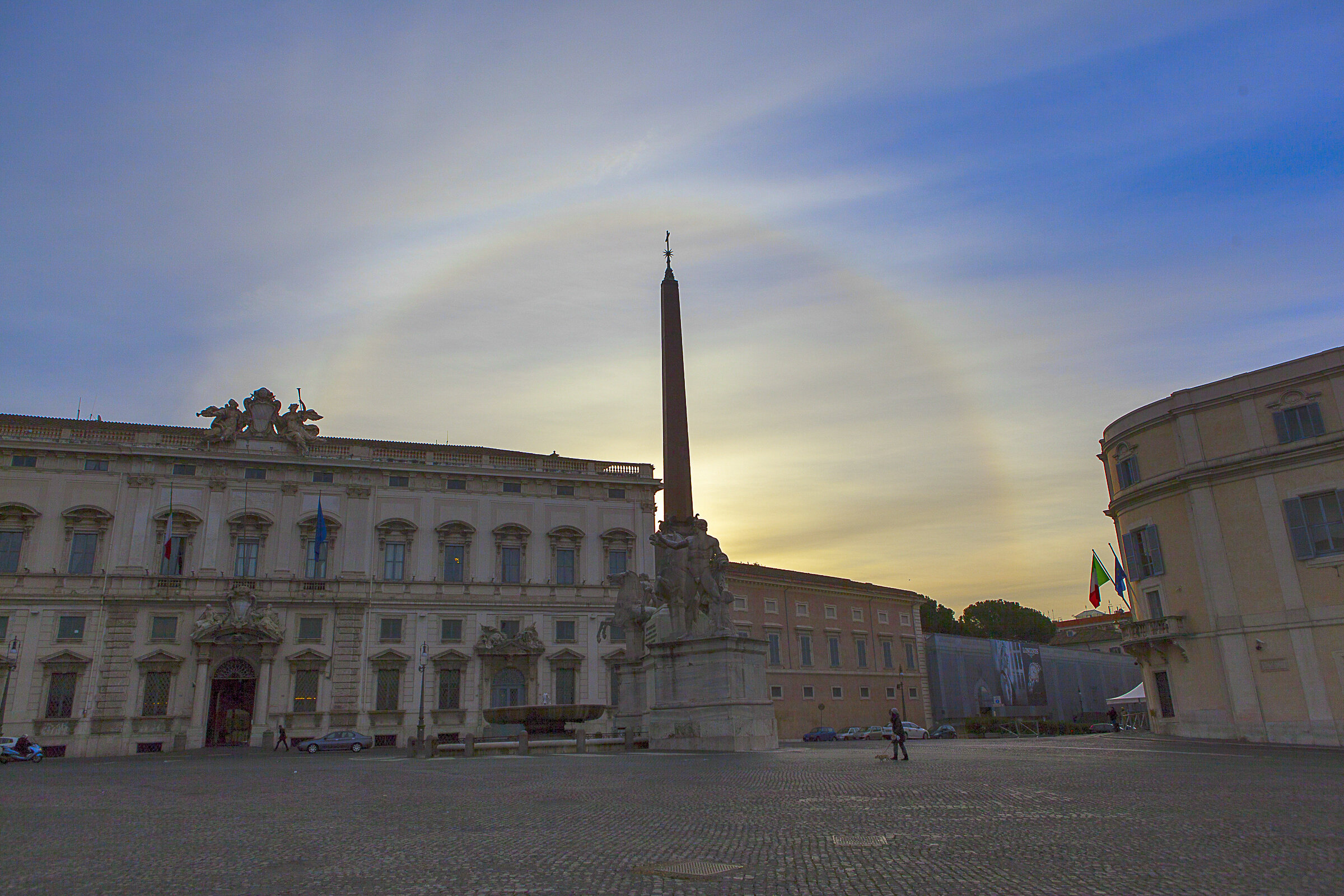
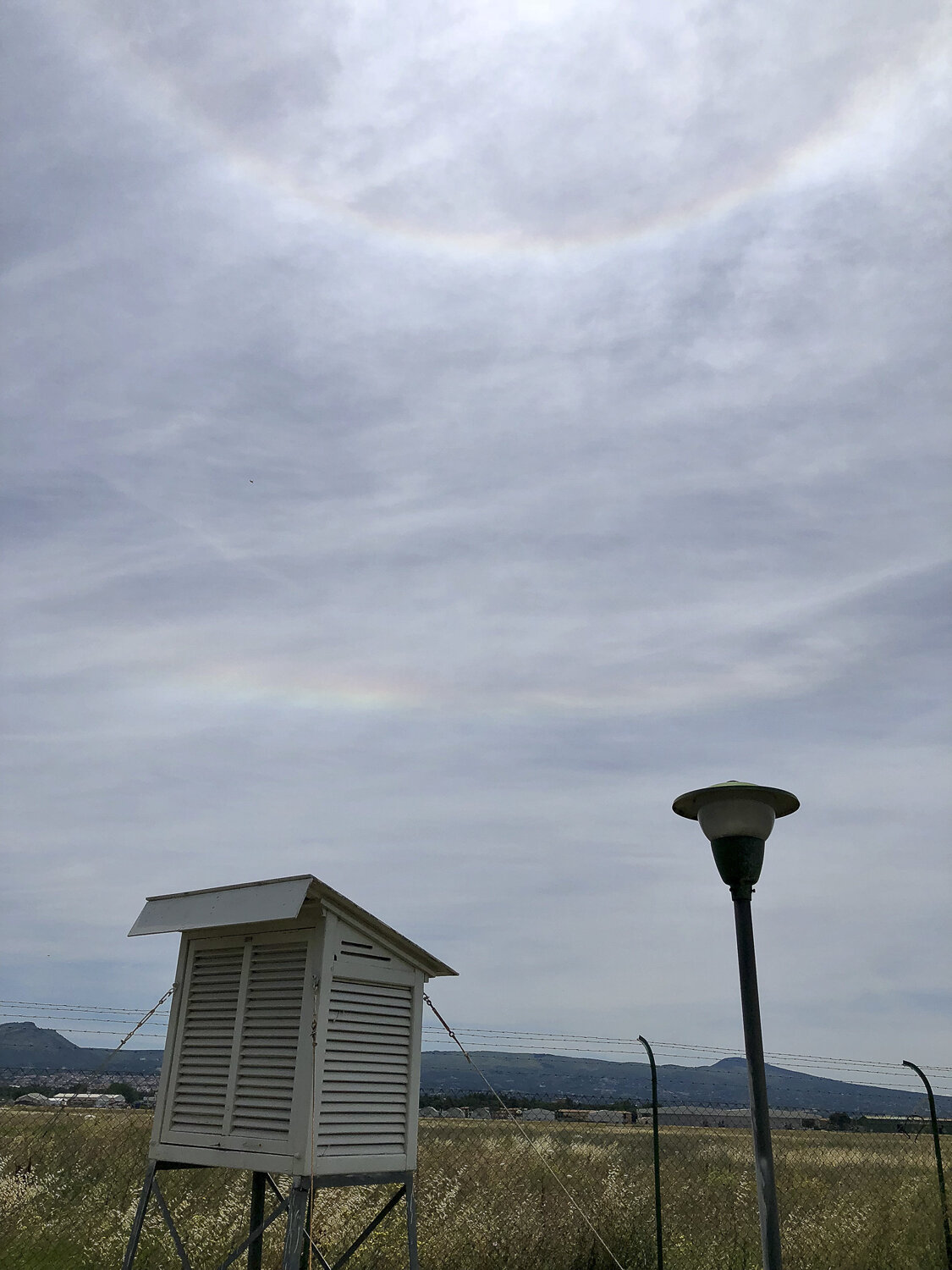
One of the most common is the so-called 22° halo, a large bright ring that surrounds the Sun or, more rarely, the Moon. The name comes from its apparent angular distance from the light source: about 22 degrees. The WMO also recognizes 46° halos, light pillars, arcs, and other more complex phenomena. International Cloud Atlas
Among these phenomena we also find parhelia, the typical bright spots that can appear at the sides of the Sun. They are also known as sun dogs, literally “dogs of the Sun”. They form when light is refracted through hexagonal ice crystals oriented in a particular way. They generally appear at the same height as the Sun and about 22° of angular distance.
And then there's the circumhorizontal arc
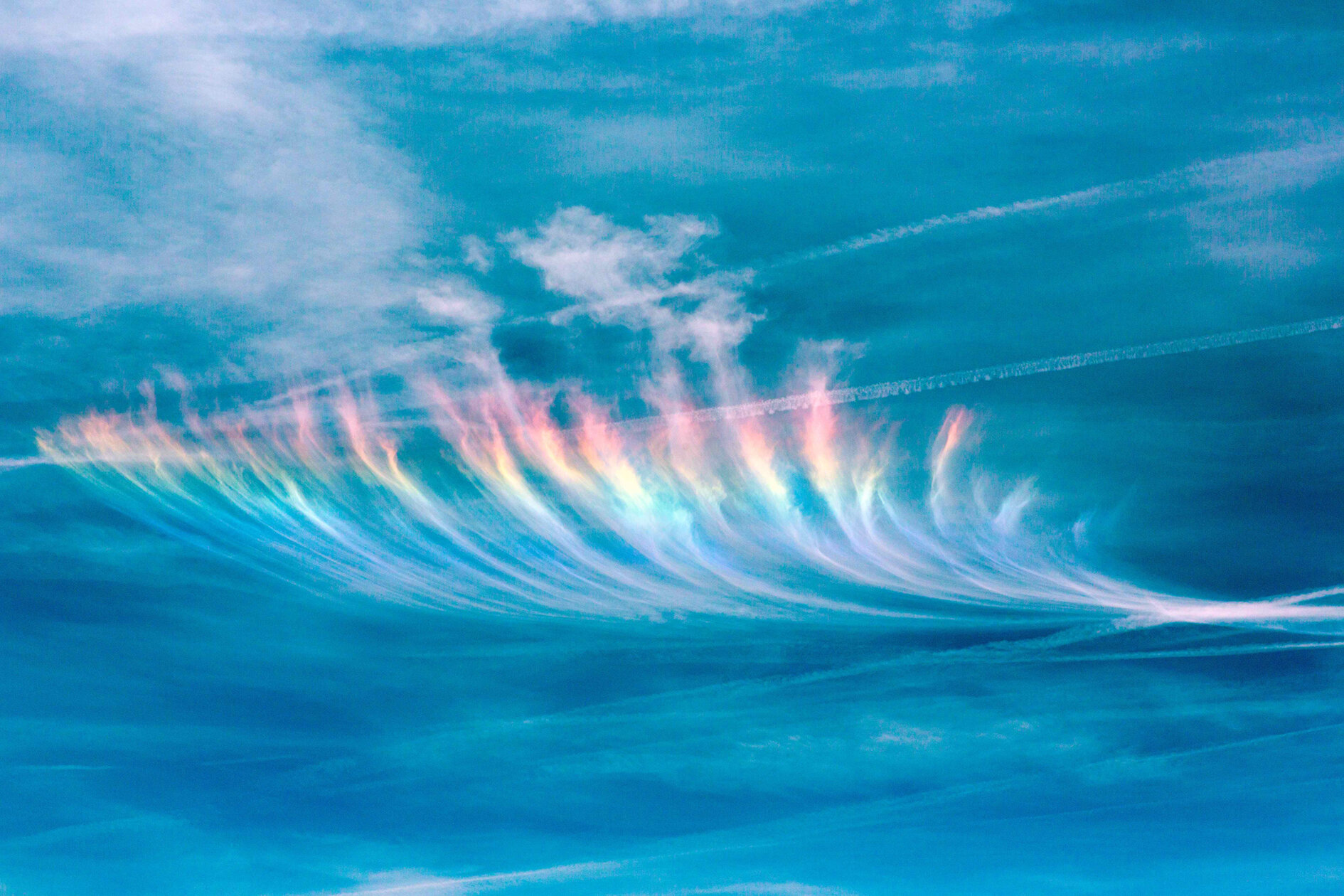
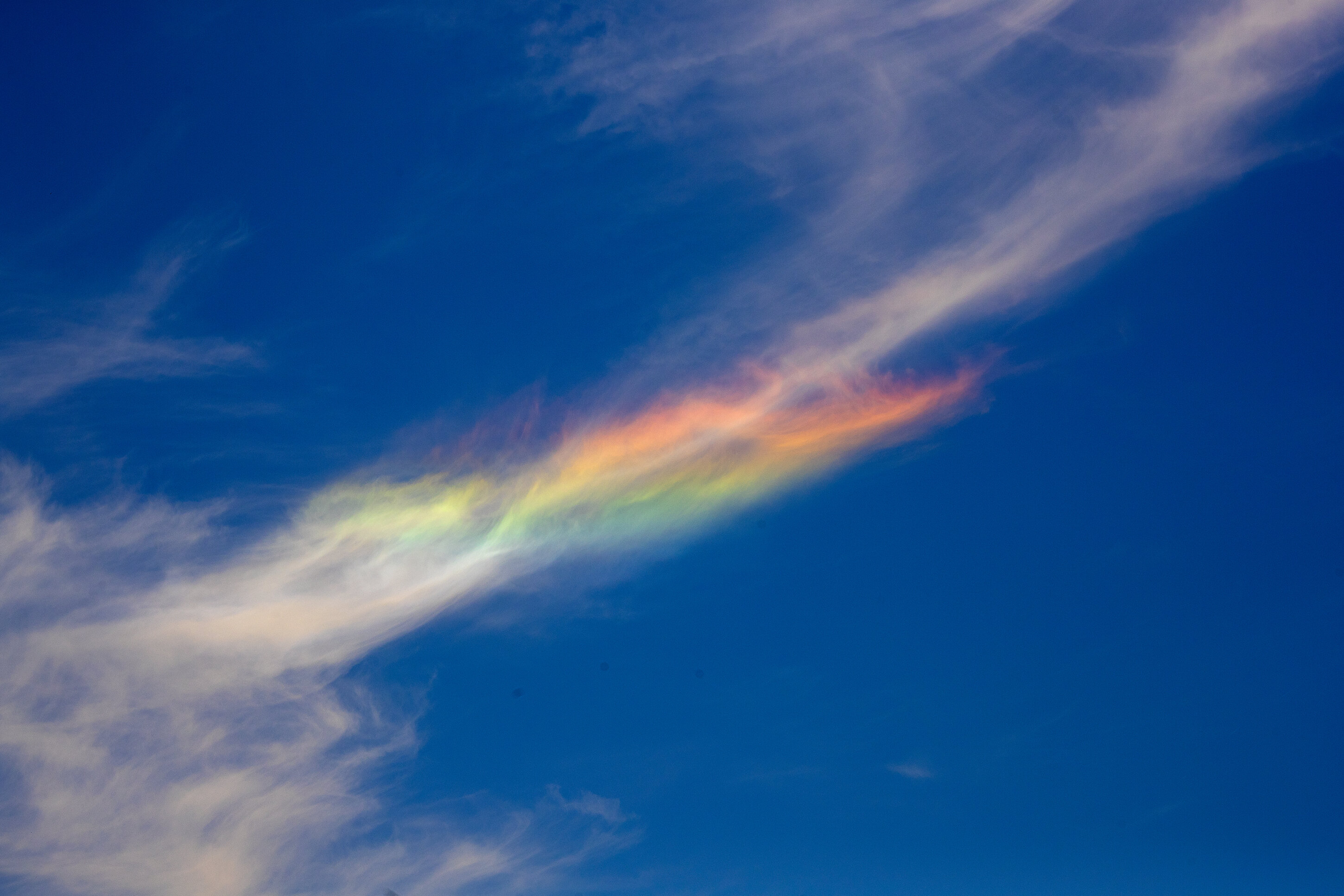
Among the most spectacular halo phenomena is the circumhorizontal arc, often referred to by the English acronym CHA (Circumhorizontal Arc).
Unlike the classic circular halo, the circumhorizontal arc appears much closer to the horizon and runs parallel to it. It can show up as a long arc with extremely vivid colors, with red, orange, yellow, green and blue shades clearly separated.
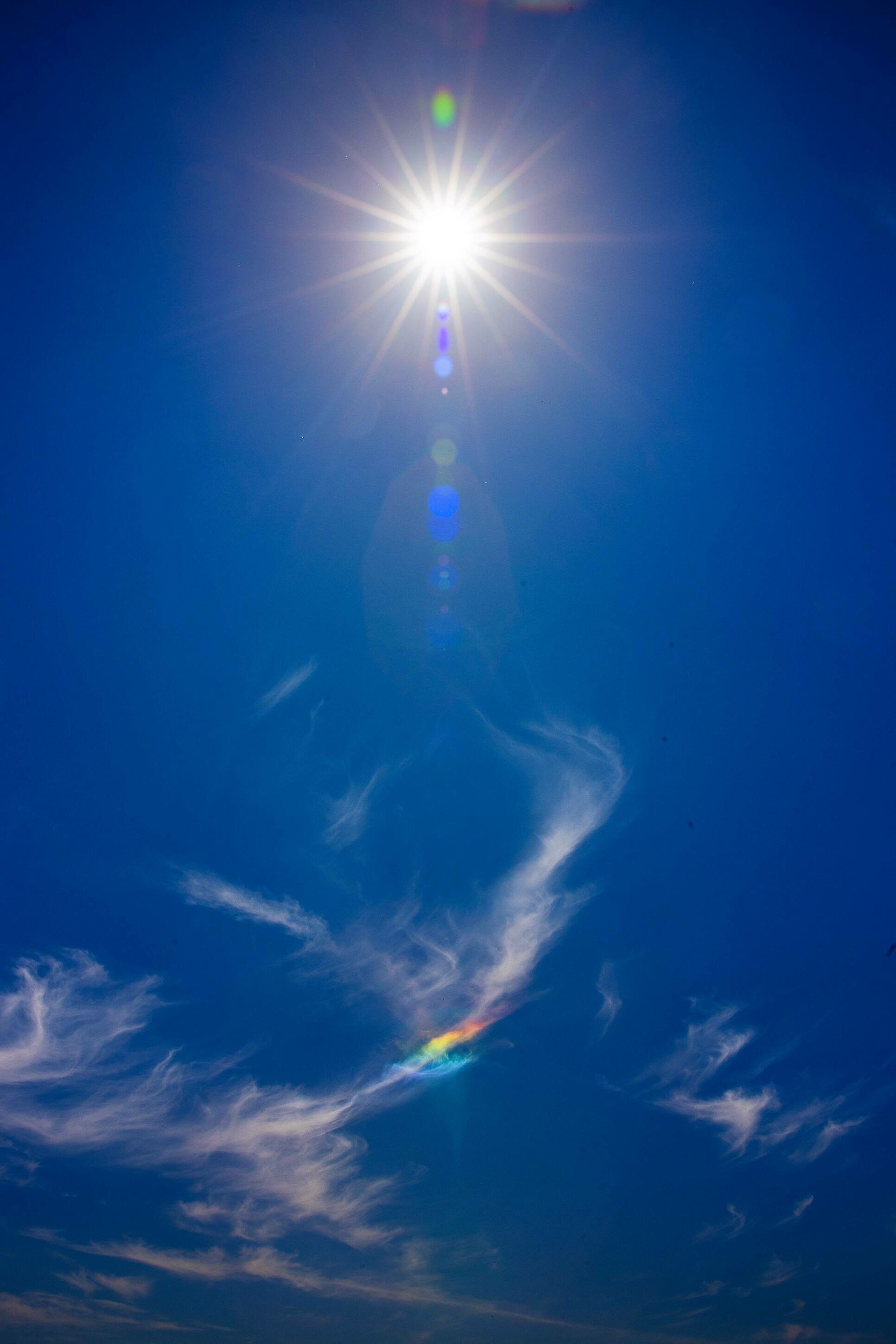
The WMO defines it precisely as an arc near the horizon that extends parallel to it. Its appearance is tied to a very specific condition: the light source must be more than 58° above the horizon. When it is the Sun, this means the arc can appear only during the hours and times of year when the Sun reaches a sufficient height in the sky.
Why is such a high Sun needed?
The explanation lies once again in the shape of the crystals.
The circumhorizontal arc is produced mainly by hexagonal plate-shaped ice crystals, suspended in high clouds. These crystals tend to take on an orientation with their large faces almost horizontal.
Sunlight then enters through one of the crystal’s side faces and exits from the lower face, which is almost horizontal. The path through these surfaces, set at an angle of about 90°, produces a particular refraction and a strong separation of colors.
But there is a problem: if the Sun is too low, the light cannot exit the crystal in the way needed to produce the arc. Below about 58°, the light path no longer allows the phenomenon to form. This is why the circumhorizontal arc is typically associated with late-spring and summer days at mid-latitudes.
The phenomenon reaches especially favorable conditions when the Sun is around 68° high: according to the WMO, at exactly this height the arc can reach its maximum intensity

When can we observe it in Italy?
Italy lies at latitudes where, during part of the year, the Sun can reach the required height. Generally speaking, late spring and summer are the most favorable period, especially in the central hours of the day.
However, you shouldn’t expect to see it every time there are cirrus clouds. Several ingredients are needed at the same time: the Sun must be high enough, clouds containing suitable ice crystals must be present, and those crystals must have a favorable orientation.
For example, from Central Italy the circumhorizontal arc is observable mainly from late spring to midsummer, when the Sun reaches at least 58° above the horizon.
In practice:
- late April: it starts to be possible, but only for a limited period around noon.
- May–July: this is the most favorable period.
- June: it is the best month, because the Sun reaches its maximum annual height and stays above 58° for several hours.
- August: it is still possible, especially in the first part of the month, but the window shortens progressively.
- from September onward: the Sun no longer reaches the required height for much of the year; the phenomenon becomes possible again only in the following spring.
But watch the time: In Rome the Sun exceeds 58° roughly from late April to late August, with a wider daily window around the summer solstice. The arc can therefore be looked for mainly in the central hours of the day, roughly between late morning and early afternoon.
Warning: it’s not a rainbow!
One of the most common misunderstandings concerns the circumhorizontal arc. At first glance it can look like a huge rainbow hanging in the sky and for this reason it is sometimes called, especially in the media, “smiling rainbow” or fire rainbow. In reality, it is not a rainbow.
A rainbow forms when light interacts with liquid water droplets, through a combination of refraction, internal reflection and light dispersion. The circumhorizontal arc, instead, is a halo produced by light passing through ice crystals. The two phenomena can therefore have similar colors, but they have different physical origins.
There is also an easily recognizable difference: the circumhorizontal arc lies below the Sun and runs parallel to the horizon. When it is well developed, it can stretch across a very large portion of the sky; more often, however, we see only a fragment lighting up some parts of the cirriform clouds.
Why can the colors be so intense?
The particular geometry of the crystals makes the colors of the circumhorizontal arc appear very pure and sharply separated. Atmospheric Optics notes that chromatic dispersion can be even more evident than what is normally seen in a rainbow.
The result is a phenomenon that looks almost painted on the sky: a bright band with saturated colors, often with red at the top. However, it isn’t necessary for the arc to be complete. In fact, in most observations only portions of the arc appear, because the crystals aren’t evenly distributed and cirriform clouds can be patchy.
So it’s a matter of geometry, meteorology, and luck.
A sky that turns into an optics lab
Halos show in a spectacular way how complex the interaction between light and the atmosphere can be. A simple ice crystal, invisible to the naked eye from kilometers away, can alter the path of light and help form luminous structures that occupy a huge part of the sky.
Bibliografia nei testi consigliati