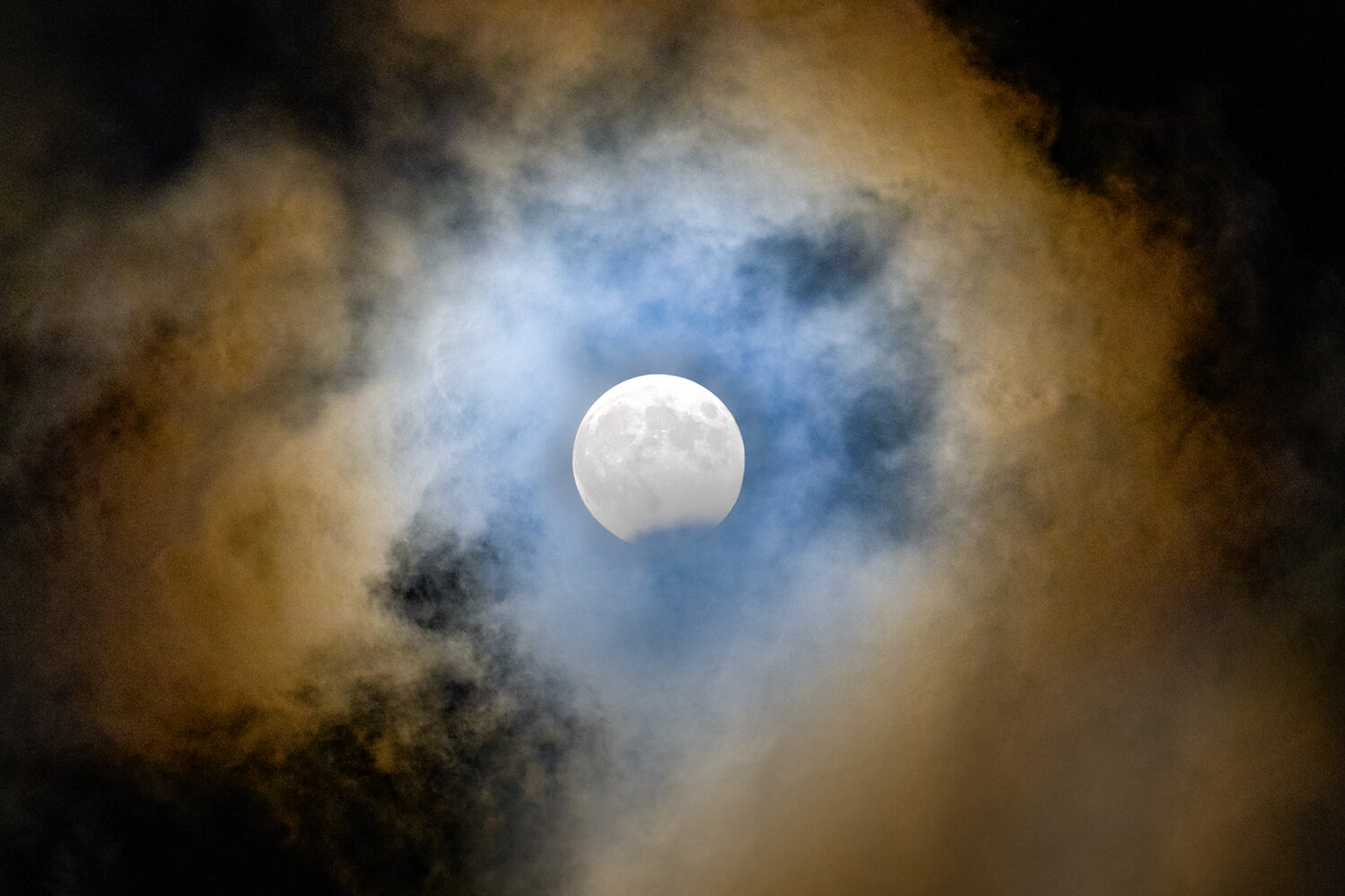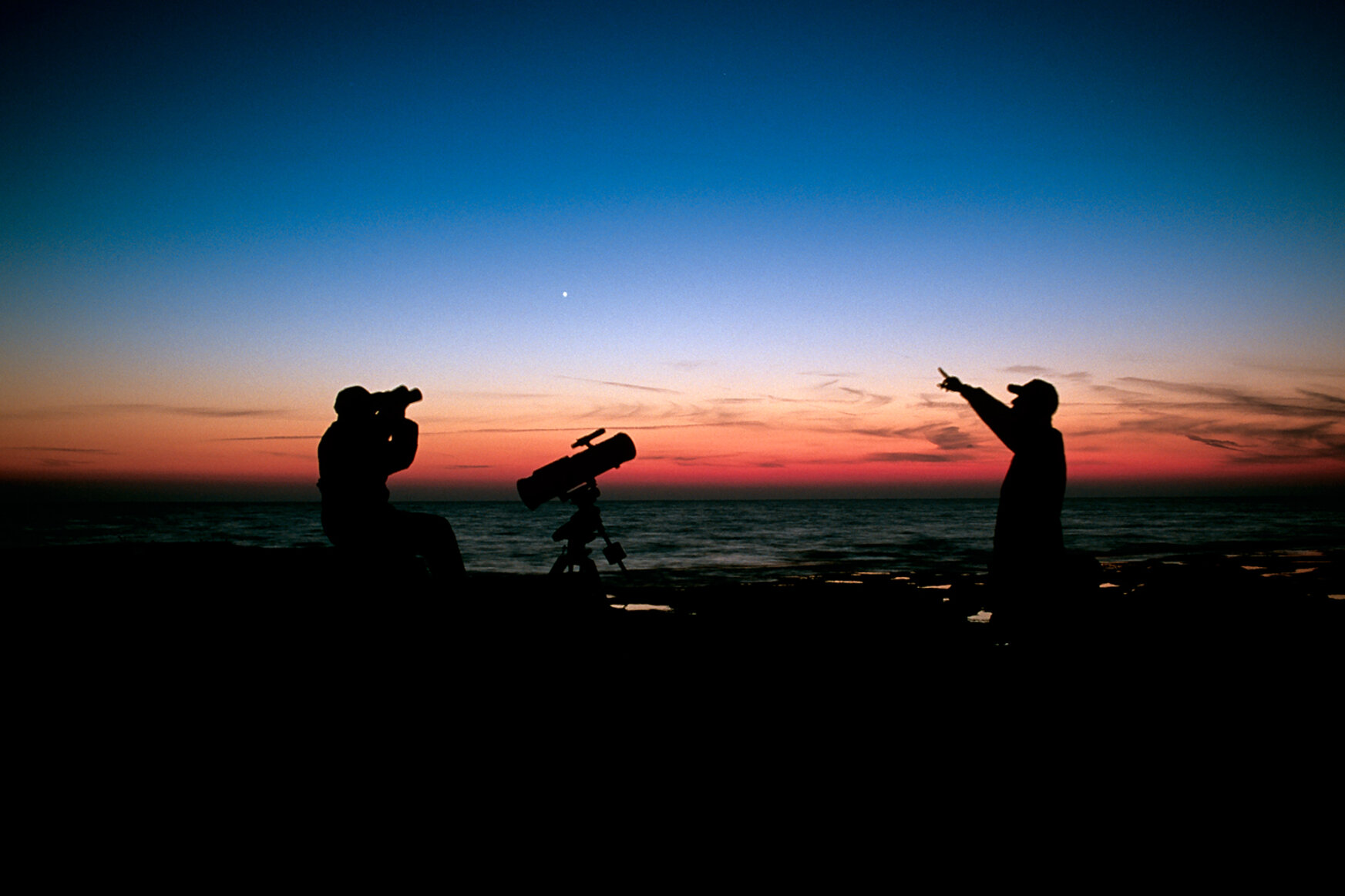

The sea’s glitter:
when light turns into a thousand colored sparkles
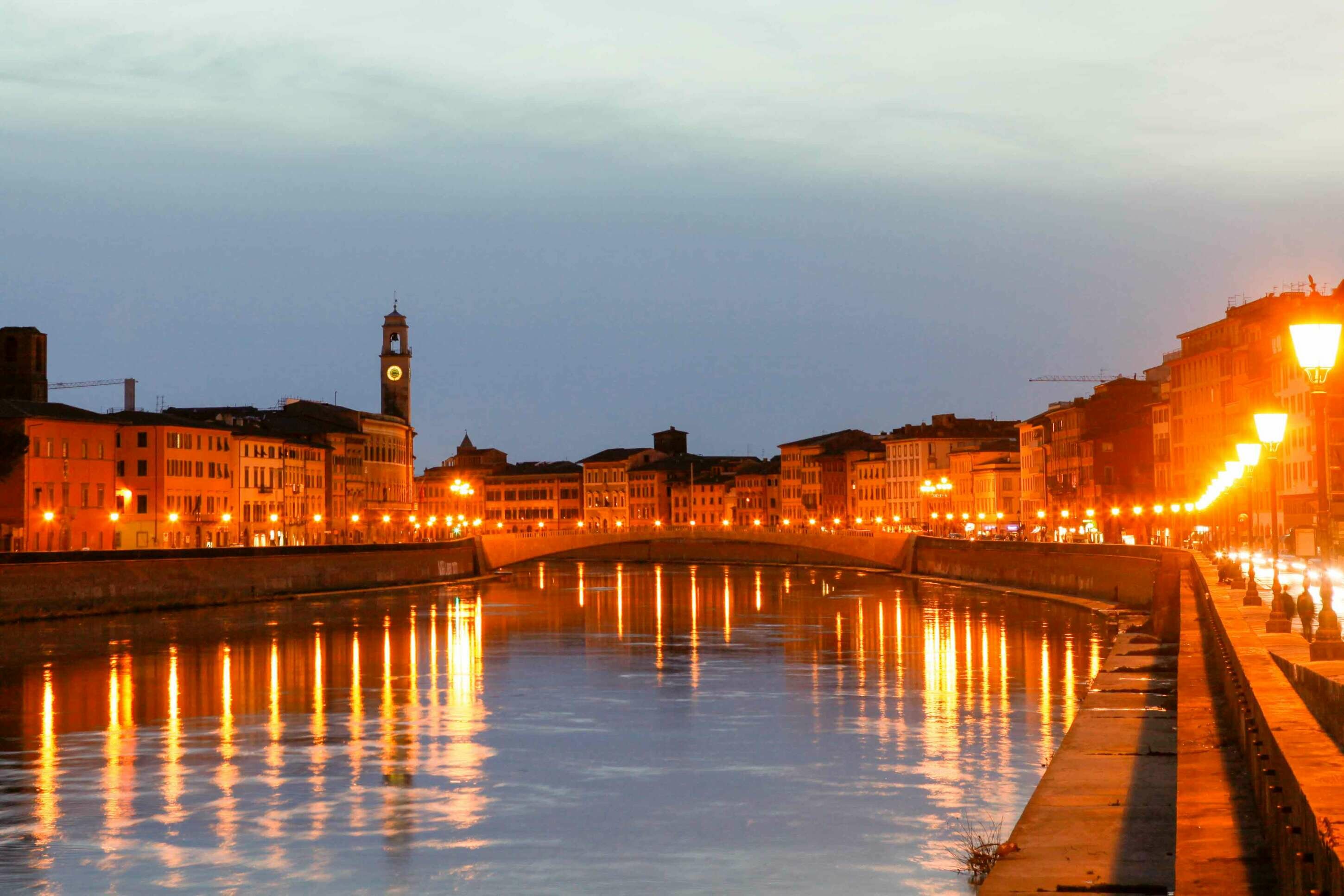
Have you ever watched the sea when the Sun is low on the horizon and its light seems to turn the water into a stretch of thousands of sparkles?
What we see is glitter, or sun glint in the scientific literature: an optical phenomenon that arises from the reflection of sunlight or moonlight on the uneven surface of the water.
Normally glitter looks white, golden, or silvery. Under particular conditions, however, the sparkles can take on different colors, creating an even more spectacular effect: this is the so-called colored glitter.
Why does the sea seem to sparkle?
We can imagine the sea surface as made up of a huge number of tiny mirrors.
If the water were perfectly smooth, light would be reflected in a regular way, just like on a mirror. But the sea surface is constantly distorted by waves and wind.
Each small ripple has a different shape and tilt and can therefore reflect light in a different direction.
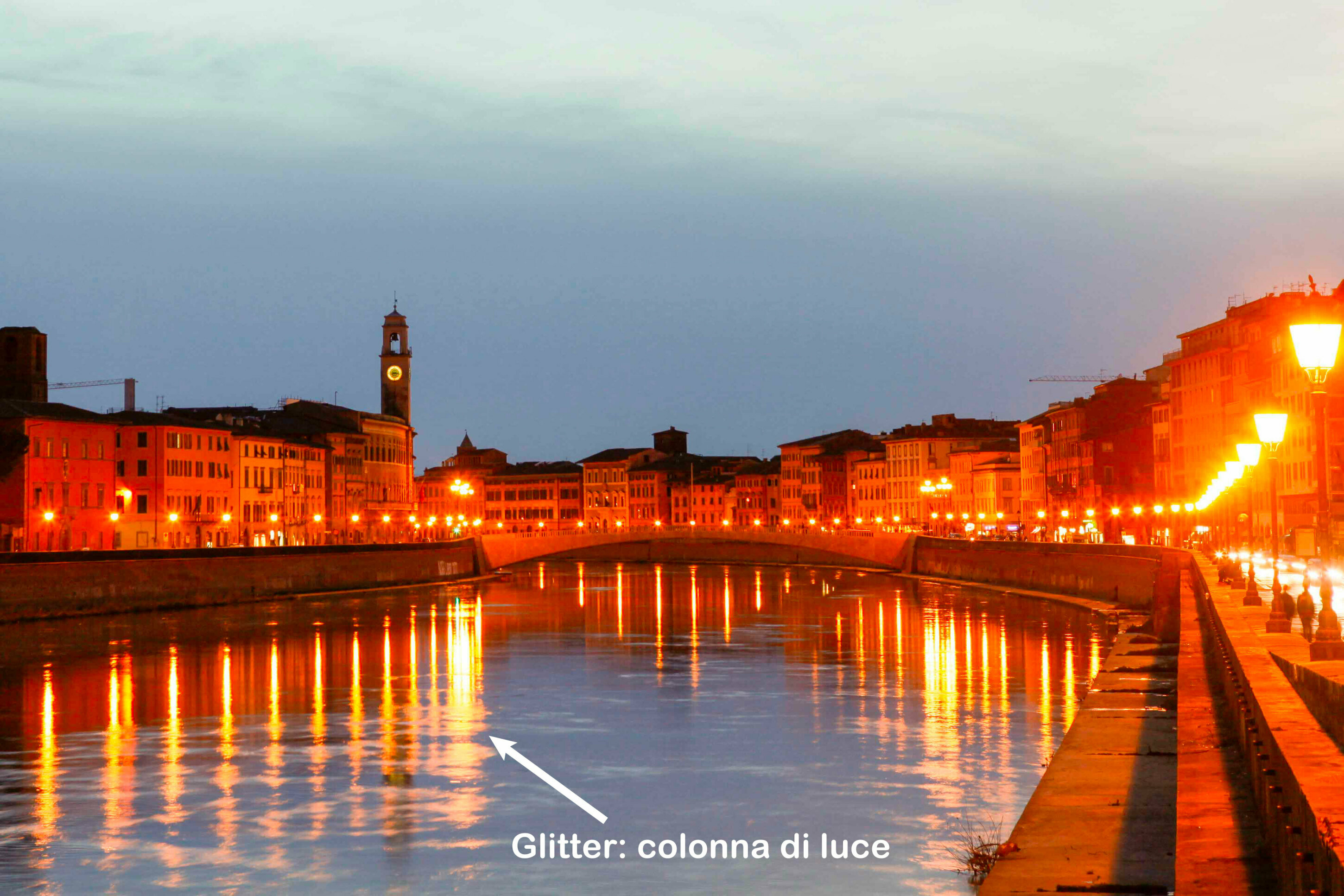
When one of these tiny surfaces is tilted just right, it can reflect sunlight straight toward our eyes or toward the camera lens. At that spot a small bright sparkle appears, called glint.
The sum of thousands of these small reflections creates the characteristic glitter trail.
From the point of view of optical physics, this phenomenon is a special case of atmospheric pillars (but in our case the reflection happens on water and not on plate-shaped ice crystals).
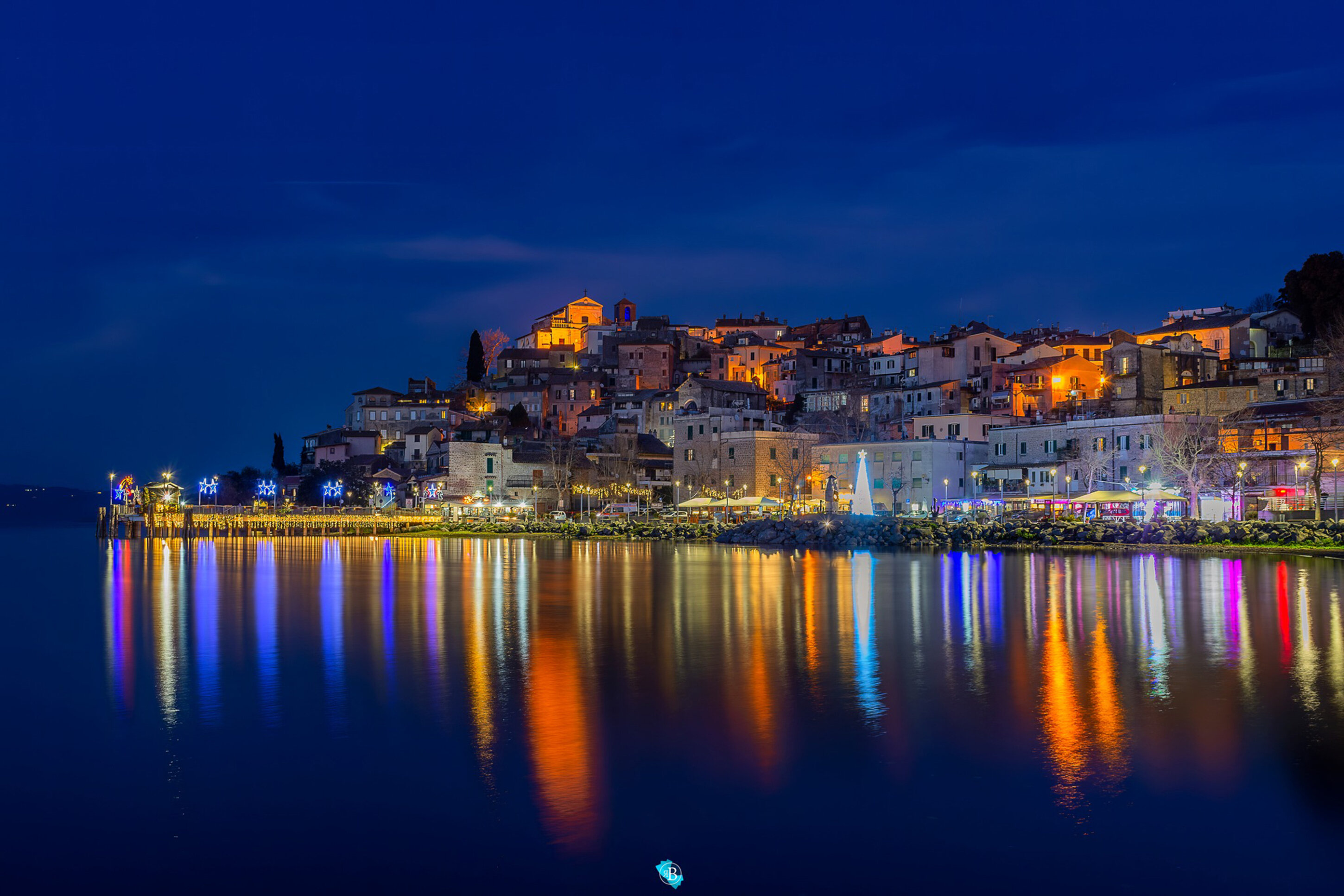
Photo by Roberto Bonini
An effect that keeps changing
The glitter is never completely still.
The waves move, change shape and constantly shift their tilt. Even the tiny “mirrors” that reflect the light therefore change position and orientation.
That’s why the sparkles seem to switch on and off continuously, giving the sea surface that bright and almost shimmering look.
It’s the meeting of light, geometry and wave motion that creates this effect.
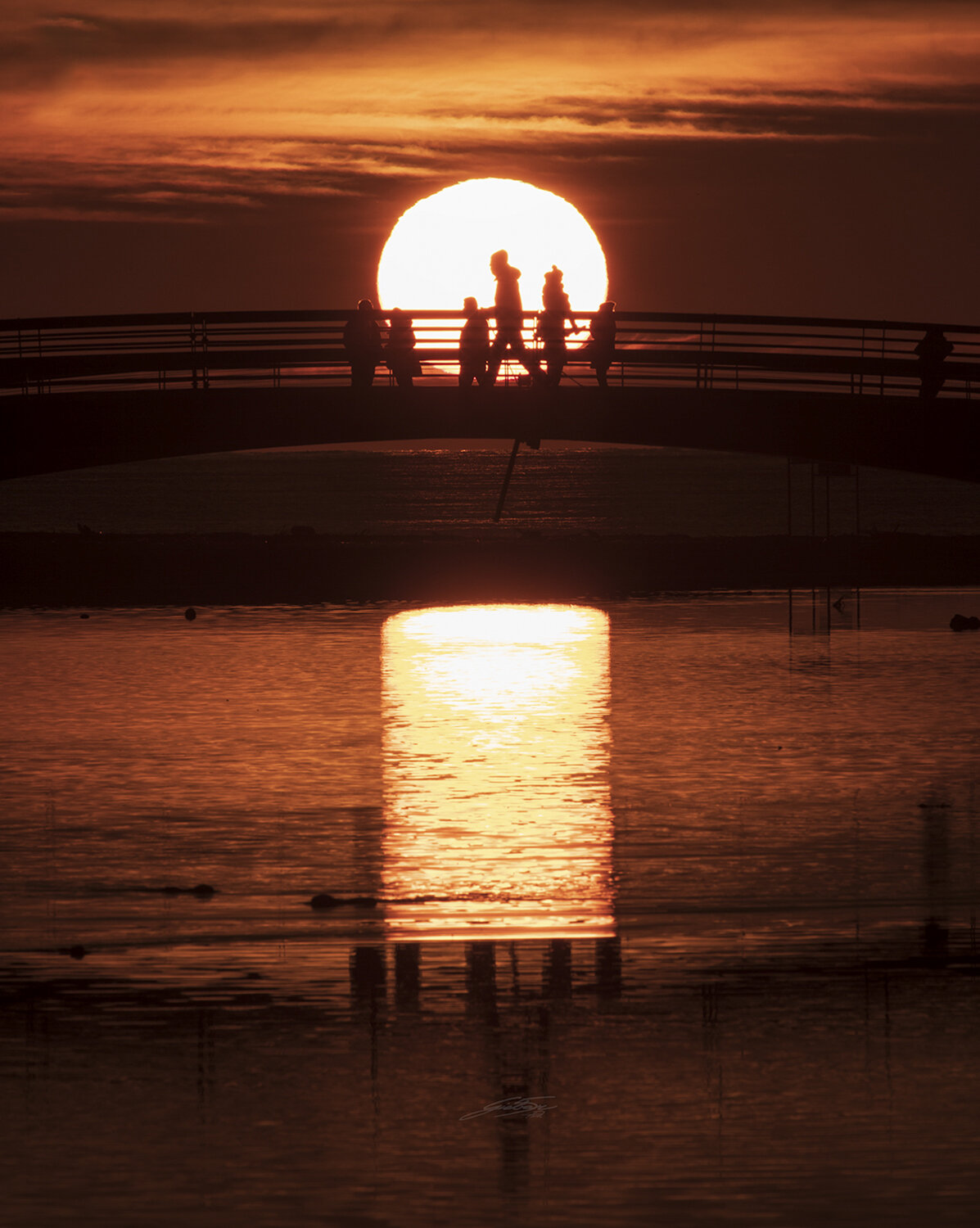
Photo by Antonio Tartarini
Why at sunset is the glitter so spectacular?
The Sun’s position on the horizon is very important.
When the Sun is low, like at sunrise or sunset, the light reaches the water’s surface at a particular angle and the glitter can spread out, forming a long luminous trail.
From afar it can look like a real road of light linking the Sun to the observer.
If the sea is also stirred by the wind, the different tilts of the waves make the light reflect in many directions, making the trail wider and more irregular.
When glitter turns colorful
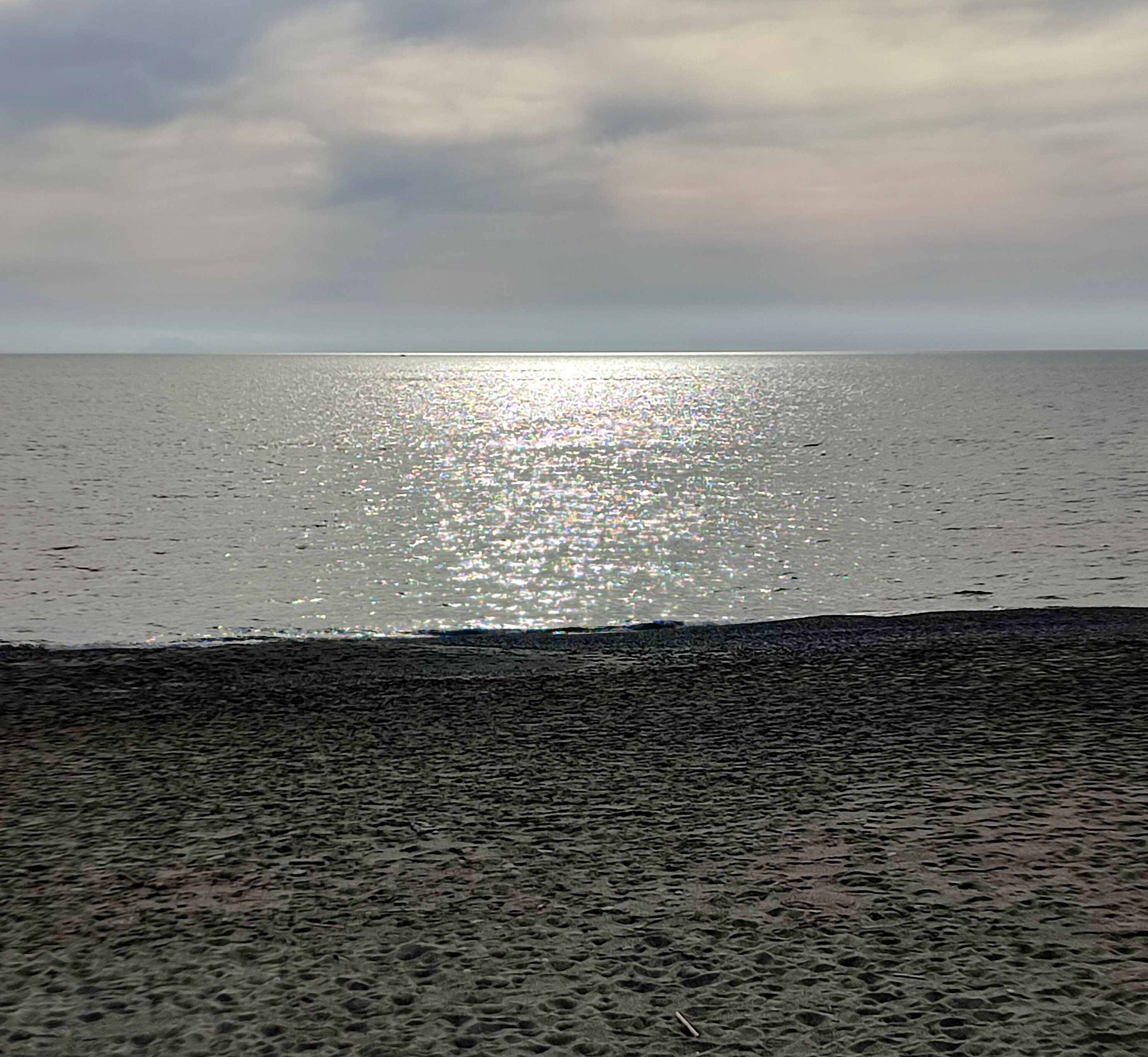
Photo by Teresa Molinaro
In some special situations glitter can take on colors reminiscent of the rainbow.
Here the atmosphere also comes into play.
In the presence of a thermal inversion, for example, a layer of colder air can form near the sea surface, trapped beneath a layer of warmer air. The temperature difference leads to a difference in air density and therefore in its refractive index.
Light passing through these air layers can therefore undergo refraction and very small deviations, which change the path of the rays before or after their reflection on the sea surface.
Under particularly favorable geometric conditions, these effects can help slightly separate the different wavelengths of sunlight, that is, the different colors that make up white light.
The result can be colored glitter, in which some sparkles appear red, orange, yellow, green, or blue instead of the usual white or golden.
It is important to stress that it is not simply cold air that “splits” light the way a prism would. Rather, it is the combination of atmospheric layering, refraction, light dispersion, the Sun’s position, and wave geometry that creates the conditions that make color differences visible.
In photography the effect can be even more evident, because a camera can record separately the different tones of the small reflection areas.
Even the wind changes the glitter
The state of the sea is another key factor.
With relatively calm water, the waves have similar tilts and the reflections stay concentrated in a narrower area.
When the wind picks up, instead, the surface becomes more uneven. The small waves take on increasingly different tilts and the light is reflected in many more directions.
The glitter thus becomes wider, more irregular and dynamic.
In the case of colored glitter, this complex geometry can help spread the different colors to different points in the scene, creating a mosaic of tiny colored sparkles.
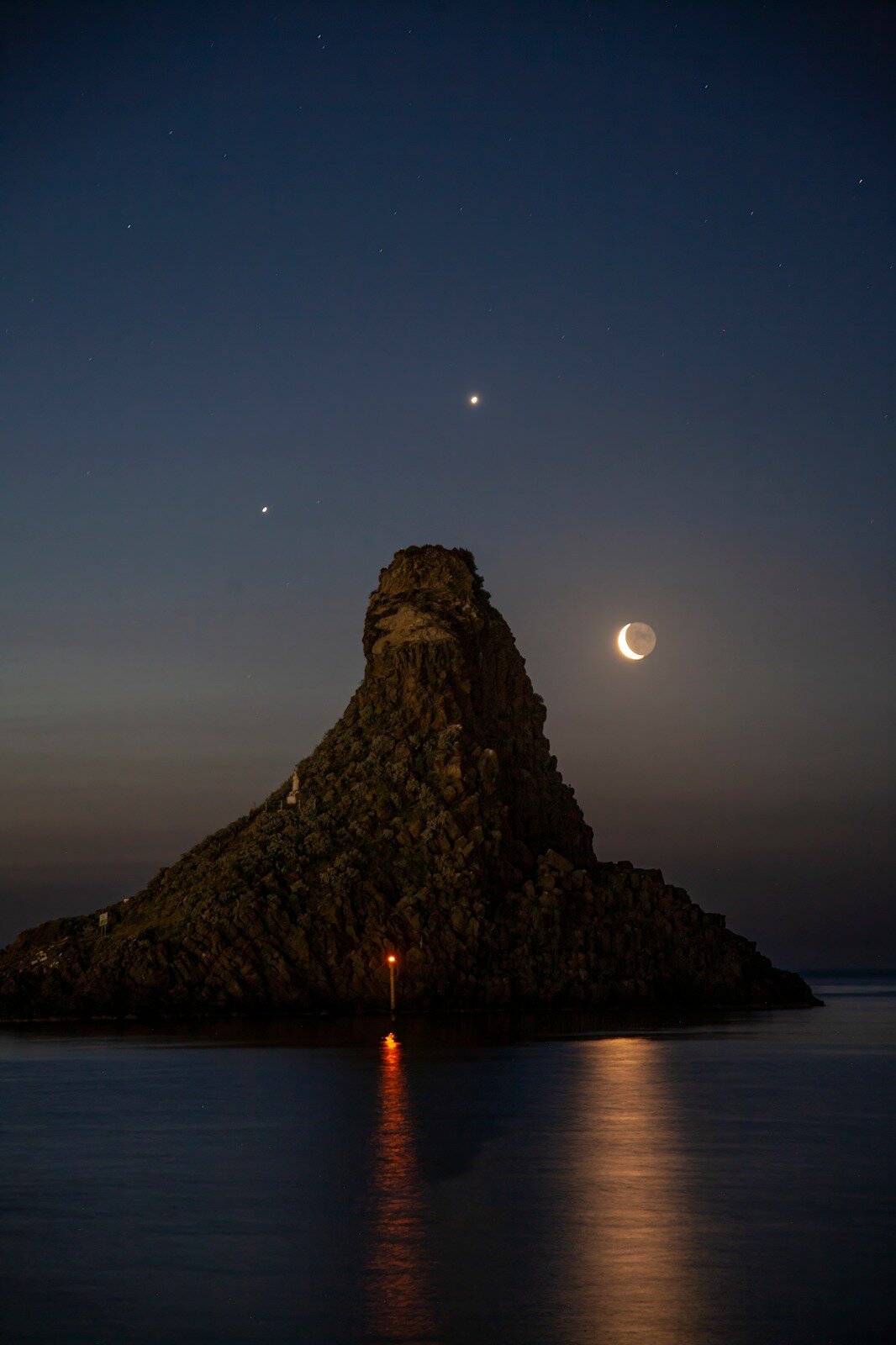
Photo by Giovanni Passalacqua
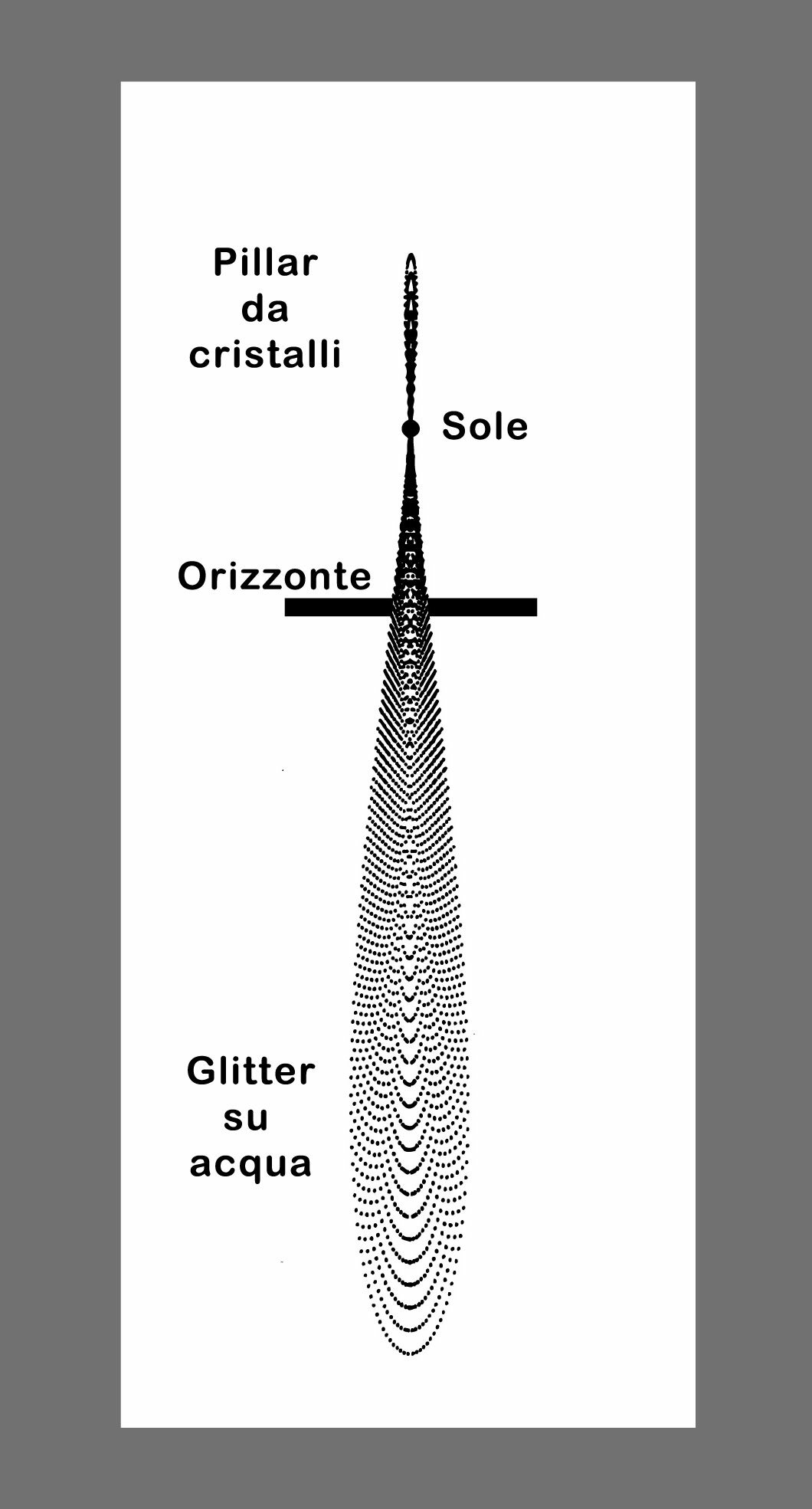
When glitter meets a column of light
The phenomenon can become even more spectacular when a Sun Pillar appears on the scene, that is, a luminous column visible above or near the Sun, generally when the latter is very low on the horizon.
If the column of light is reflected on the rippled surface of the sea, its effect may seem to continue downward, creating a kind of luminous column mirrored in the water. If conditions favorable to the appearance of colored glitter are also present, the scene can take on particularly striking tones and shades.
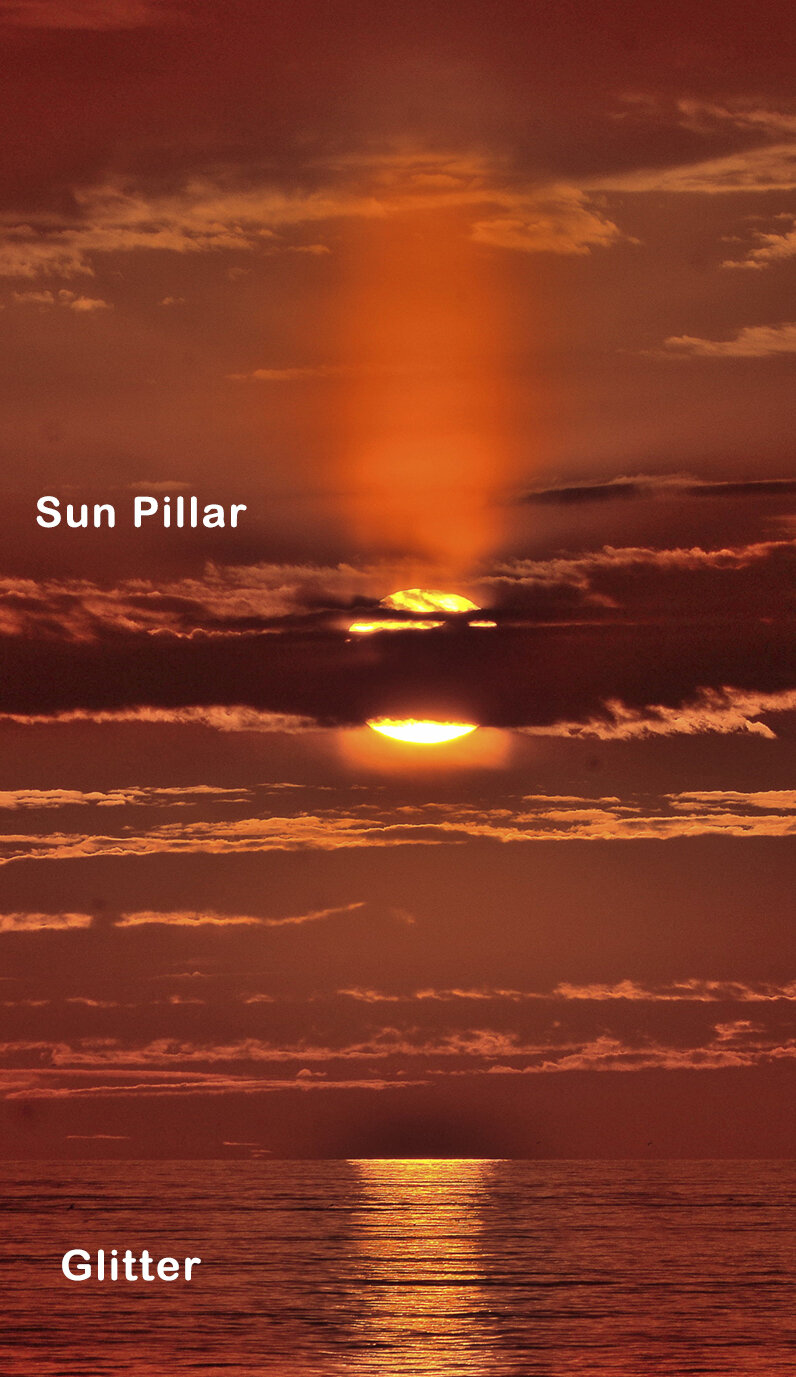
Photo by Giovanni Giannerini
Bibliografia nei testi consigliati