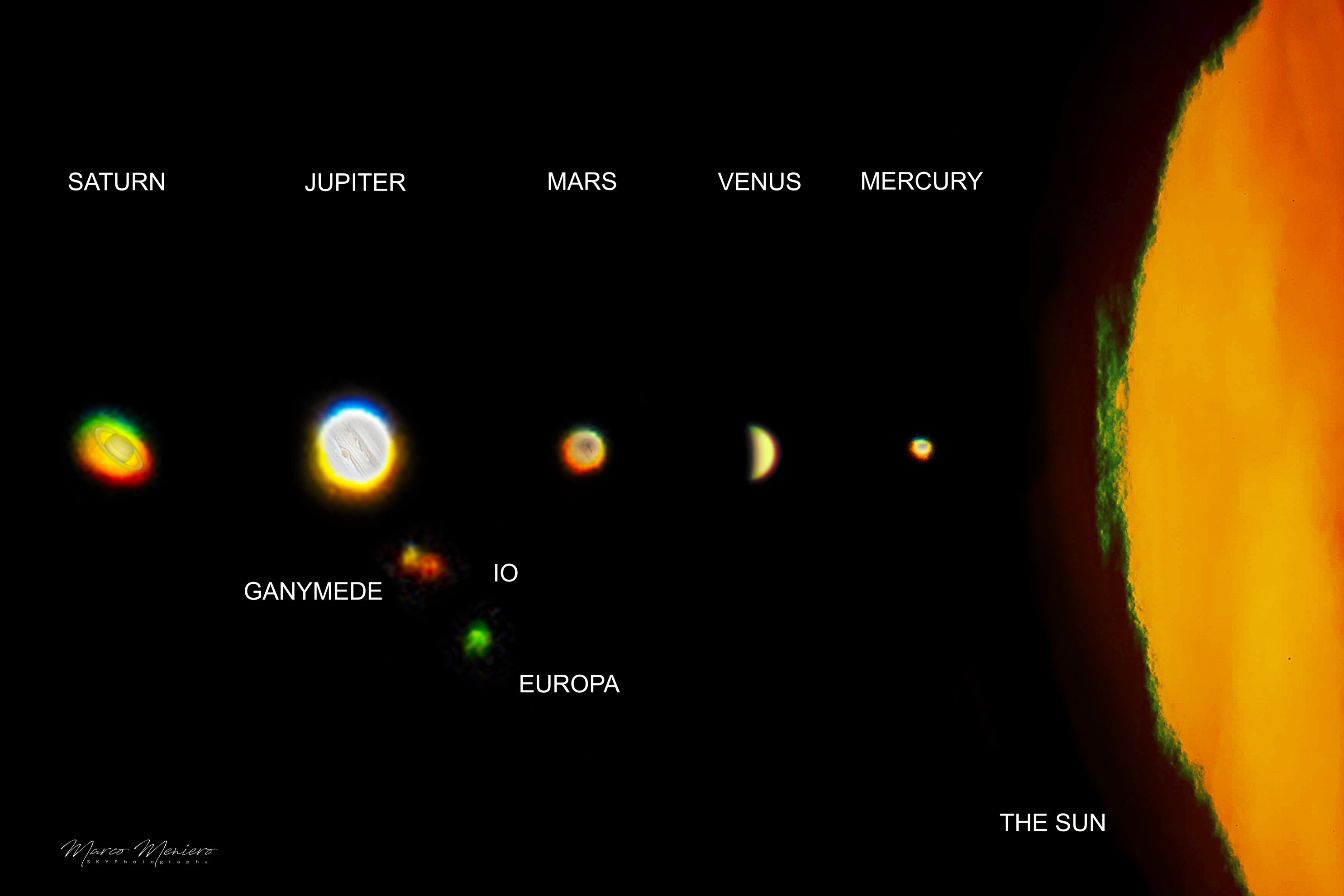


Please note that to look at the Sun on the horizon you must wear good dark glasses because the air mass between the observer and the Sun filters on average only 1/10,000 of its brightness, unlike commercial solar filters that absorb 10 times more, i.e. 1/100,000.

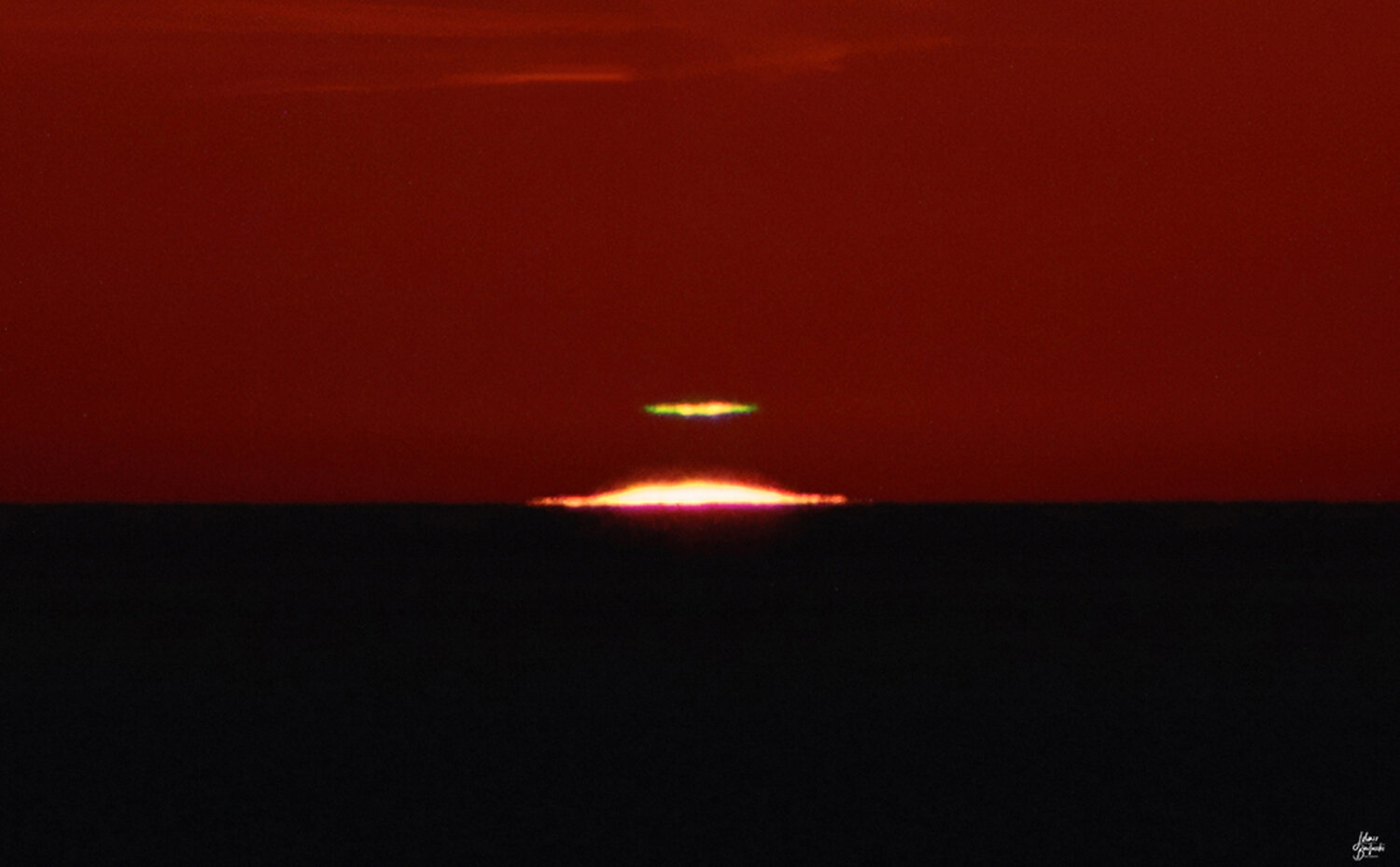
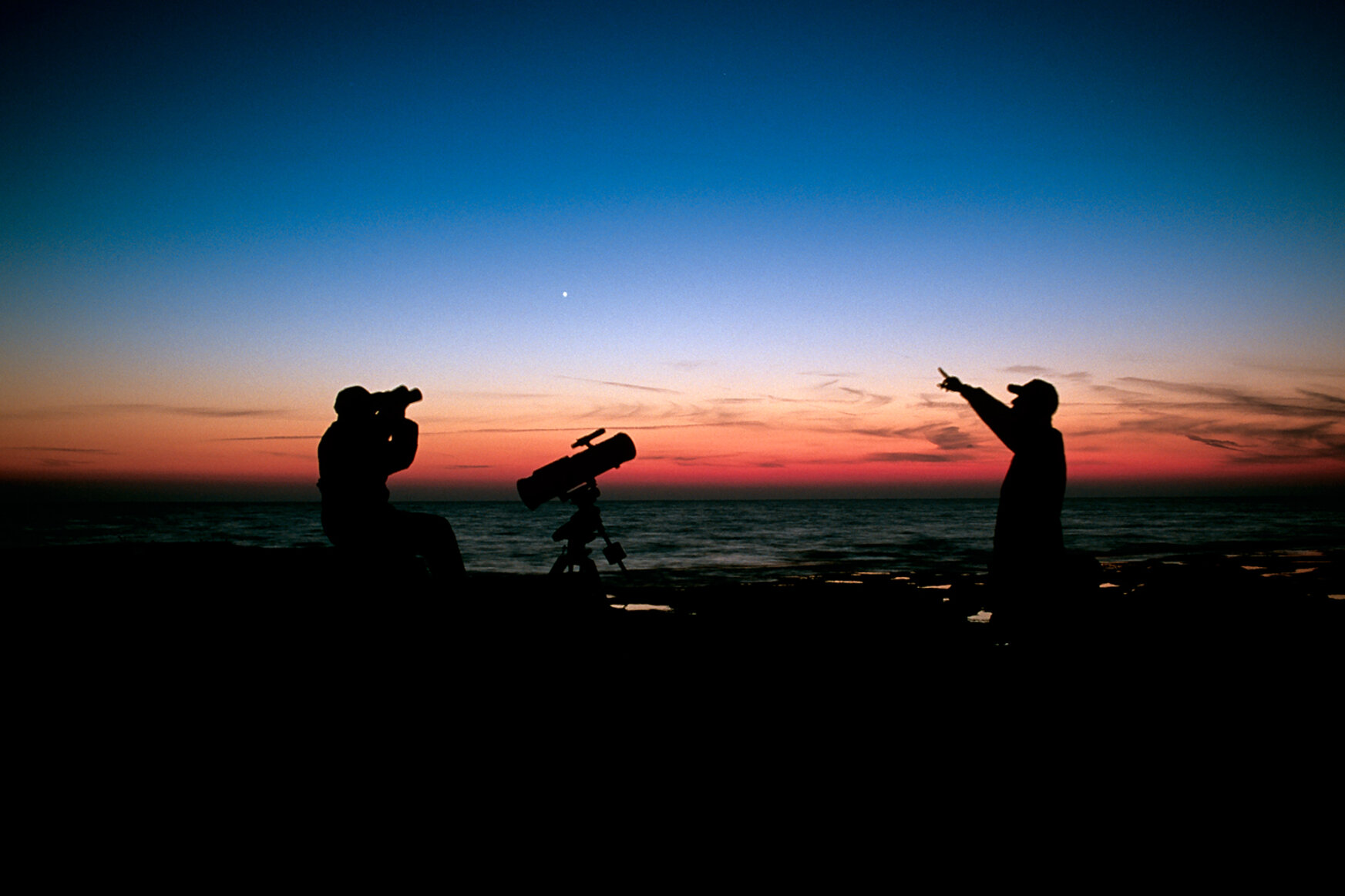
The conditions needed for the photo are air transparency and the choice of an excellent observing site. The latter must allow an unobstructed view of the horizon. If you wanted to capture only the green flash, the horizon must be over the sea and even a beach is fine as an observing point.
Mountain locations are also fine, but you must have a clear horizon. It is not advisable to set up on the roofs of buildings in cities full of dust and smog.
To determine the correct exposure time I have always applied the well-known formula:
T = [ (f/) x (f/) ] : [ iso x B ]
Where T is the exposure time expressed in seconds, (f/) is the f-stop of the optics used, iso is the sensor sensitivity and B indicates the brightness of the photographed subject. B is the unit amount of light of the green flash that reaches the sensor and is expressed in magnitude per square arcsecond (from Astronomical Almanac), or in candles per square foot (from Kingslake, Optical System Design).
The main problem is determining “B”. After many tests, I believe the correct value is between “360” and “700”. However, if you wanted to photograph the flash from sites far from the sea, empirical experience shows that the value of “B” is halved. All exposure times calculated with intermediate values are still fine; however, the photographer must be able to sense, with experience, the actual brightness of the flash in order to choose the most accurate time possible.
It is suggested not to change the default parameters for white balance, contrast and saturation, so as not to run into unpleasant issues such as sharpening (micro-contrast). You should also resist the temptation to increase green saturation.
It is also not recommended to modify DSLRs by removing the stock Ir Cut filter, because the light collected beyond 650 nm would partially defocus the green.
The best focal lengths are those over 300 mm, but not all optical setups are suitable because they must not suffer from chromatic aberration, so apochromatic lenses are the most appropriate. A very good performance/price compromise can be small Maksutovs and short 80mm refractors. When taking photos you must be careful not to confuse optical chromatic aberration with true green.

In recent years I have experimented with the use of Lolli Adriano’s AMPLI optics in order to increase the focal length of the optics without losing sharpness. AMPLI is an optical amplifier that is mounted between the photographic lens and the shooting camera.

Bibliografia nei testi consigliati