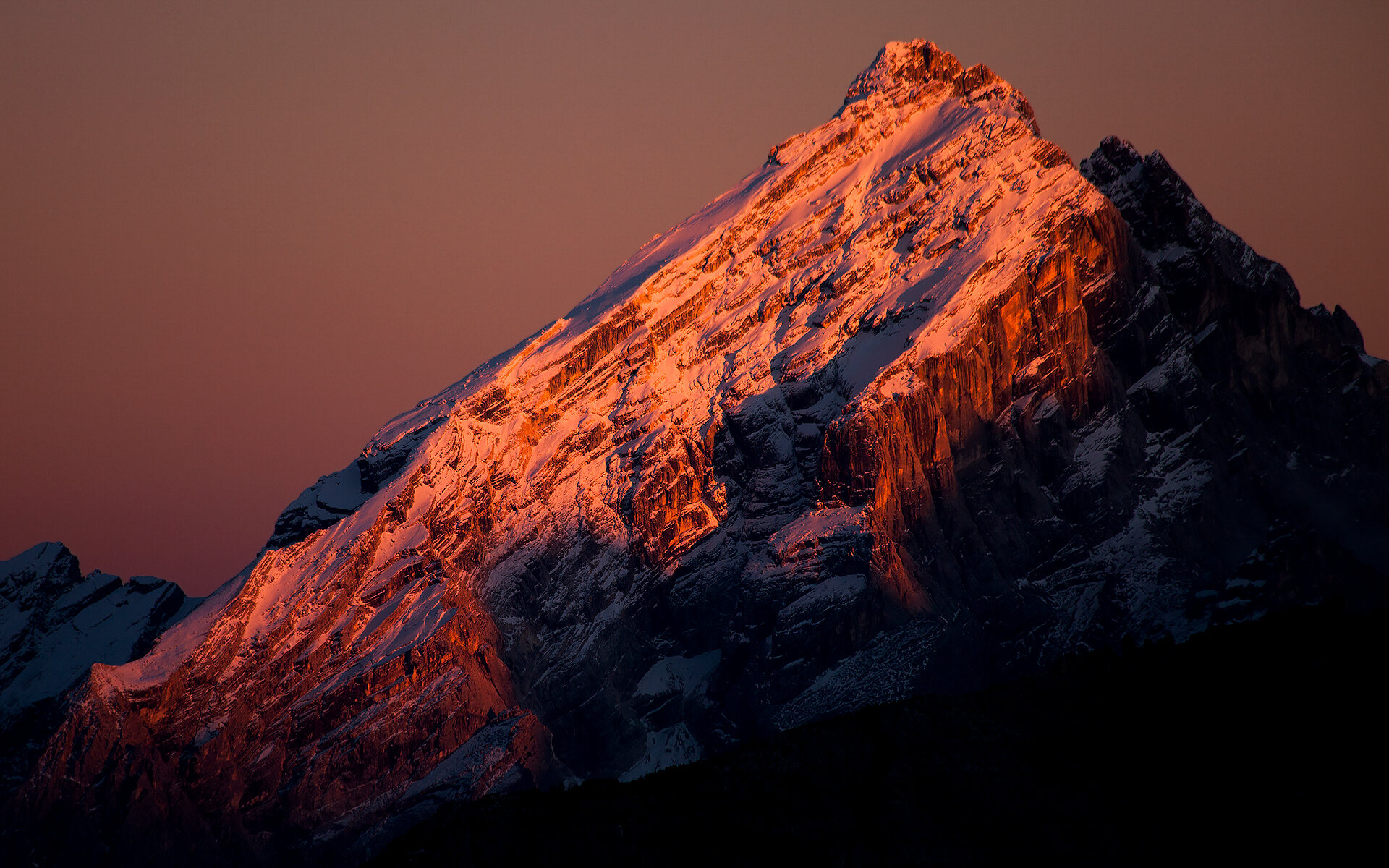



Crepuscular rays are bands of shadow alternating in the sky. They come from sunlight when it is partly blocked by high mountain peaks or cloud formations such as cumulonimbus. The rays seem to diverge due to a perspective effect; in fact they are parallel to each other and come from a point that seems infinitely far away, namely the Sun. Between the dark areas and the bright areas there is a portion of air that is partly lit, called penumbra. Shadows like crepuscular rays are never totally dark and at times can be colored. The cause may depend on the color of the light that creates it, on the color of the object that blocks it, and on an individual psychological factor called “chromatic adaptation”. For example, shadows on snow look yellowish when the sun is on the horizon, while they seem blue when it is high in the sky.
The physical cause of shadows, and thus of crepuscular rays, is the scattering of sunlight caused by molecules and by some particles such as dust, haze, mist, fog, or veils of cloud. Crepuscular rays, also called Buddha Rays or Ropes of Maui, can appear suddenly between the edges of cumulonimbus, between mountain peaks, or near the horizon before sunset or after sunrise. They can even be seen underwater or with the Sun high in the sky. They point to the solar disk, even when it is below the horizon, or to the antisolar point, but in this case they are called anticrepuscular rays.
NOTA BENE: i raggi visibili sono fasci alternati di luce e ombra; la diffusione contribuisce alla loro visibilità, ma non è la causa geometrica delle ombre.
Crepuscular

Anticrepuscular

Detail of crepuscular rays

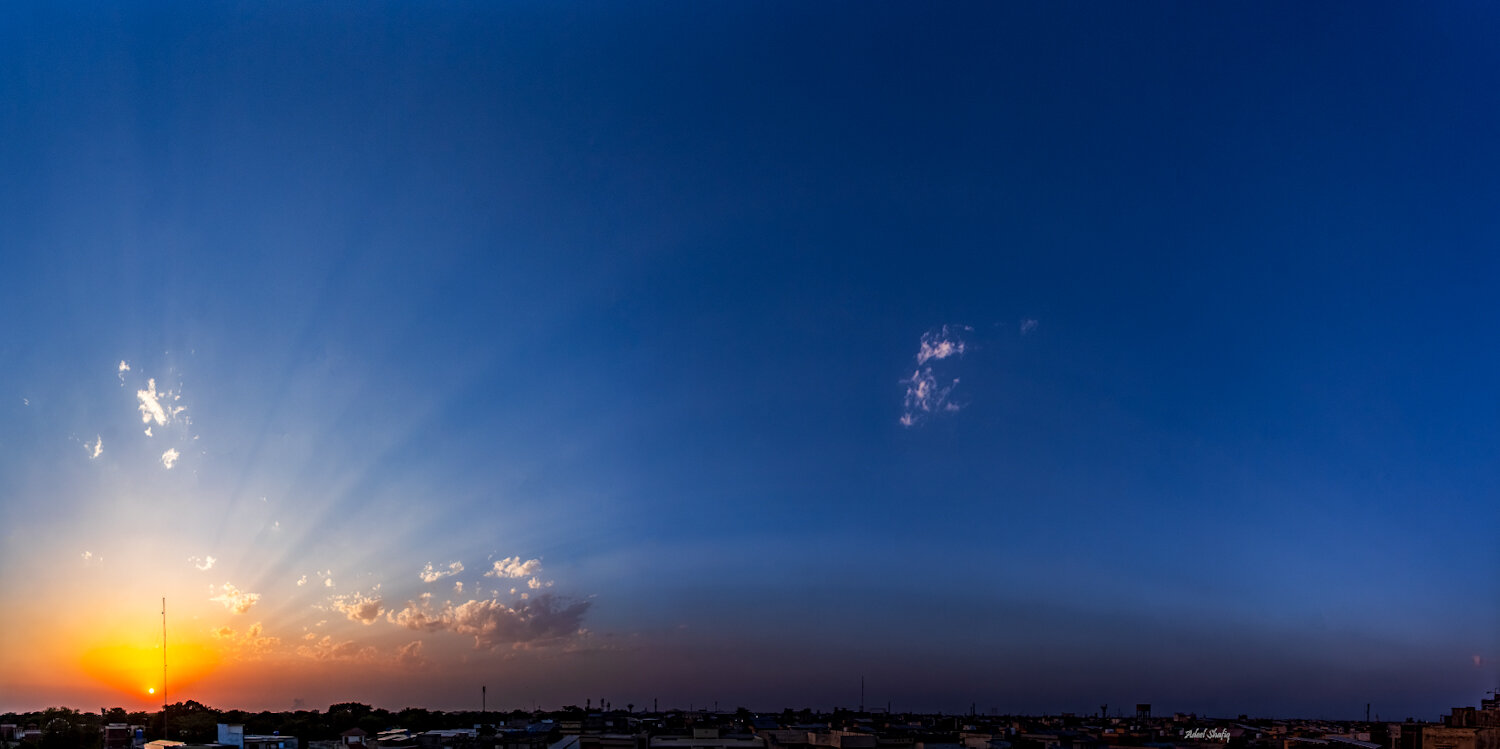
Raggi crepuscolari e anticrepuscolari, foto di Adeel Shafiq
Bibliografia nei testi consigliati.